How to Choose Commercial Air Conditioning for Restaurants
Choosing the right commercial air conditioning for a restaurant is about far more than cooling the dining room. The ideal solution should balance temperature control, ventilation, indoor air quality, energy efficiency, customer comfort, and staff wellbeing while coping with heat from cooking equipment, changing occupancy levels, and seasonal demand. In this guide, you’ll discover how restaurant layouts, kitchen heat loads, HVAC system sizing, ventilation requirements, running costs, and future expansion all influence the best choice. Whether you’re opening a café, upgrading an ageing system, or designing a large restaurant from scratch, understanding these factors will help you invest in a solution that performs reliably for years to come.
How to Choose Commercial Air Conditioning for Restaurants
Walk into any successful restaurant and you’ll notice something that guests rarely think about—but always experience. The atmosphere feels comfortable. The dining area stays cool even when every table is occupied. Staff continue working efficiently despite the intense heat generated by commercial kitchen equipment. Fresh air circulates naturally without distracting draughts or excessive noise.
That doesn’t happen by accident.
A carefully designed commercial air conditioning system plays a significant role in everything from guest experience and table turnover to staff productivity, food safety, and operational costs. Restaurants present one of the most demanding environments for any HVAC system, with rapidly changing occupancy, continuous heat loads, airborne grease, humidity, and long operating hours all placing additional pressure on cooling equipment.
At Aircon Group, we provide complete commercial climate solutions, from bespoke commercial air conditioning installation through to ventilation and specialist refrigeration systems, helping businesses create comfortable environments that perform efficiently throughout the year.
In this guide, we’ll explore exactly what separates an average installation from one that delivers reliable comfort, lower running costs, and long-term value.
Why Restaurants Have Unique Cooling Requirements
Unlike offices, retail stores or warehouses, restaurants combine several very different environments under one roof.
Each space places different demands on your heating and cooling system.
- A busy commercial kitchen produces continuous heat from ovens, grills, fryers and cooking equipment.
- Dining areas experience fluctuating occupancy throughout breakfast, lunch and dinner services.
- Bar areas often require separate temperature control due to refrigeration equipment and customer density.
- Food preparation areas must remain comfortable while supporting hygiene standards.
- Entranceways experience frequent temperature fluctuations as customers come and go.
Trying to cool every area using one constant temperature rarely produces good results.
Instead, effective restaurant air conditioning considers how each part of the building behaves throughout the day.
Common challenges restaurants face include:
- Hot dining rooms during peak service
- Staff overheating in kitchens
- Poor airflow between front and back of house
- High humidity caused by cooking
- Uneven temperatures throughout the building
- Restaurant smells lingering due to inadequate ventilation
- Excessive energy consumption
- Noise levels disrupting customer conversations
- Condensation around entrances or glazing
Many of these issues aren’t simply caused by insufficient cooling capacity. More often, they’re symptoms of poor system sizing or an HVAC design that doesn’t reflect how restaurants actually operate.
Start With the Heat Load—Not the Size of the Building
One of the biggest misconceptions when choosing commercial air conditioning is assuming that floor area determines the size of system required.
It doesn’t.
Professional HVAC design begins with a detailed heat load calculation, assessing every source of heat entering the building.
This includes:
- Cooking appliances
- Refrigeration equipment
- Solar gain through glazing
- Lighting
- Staff numbers
- Customer occupancy
- Electrical equipment
- Building insulation
- Air infiltration
- Seasonal outdoor temperatures
For restaurants, kitchen heat can often contribute more thermal energy than sunlight entering the building.
A restaurant with an open kitchen design may require significantly greater cooling output than another building of exactly the same size.
Oversizing the system can be just as problematic as undersizing it.
An oversized air conditioning system may:
- Cycle on and off too frequently
- Reduce humidity control
- Waste electricity
- Increase maintenance requirements
- Shorten equipment lifespan
Meanwhile, an undersized system struggles continuously, leading to uncomfortable customers, higher energy bills, and accelerated wear on components.
Professional system sizing ensures cooling capacity is matched precisely to the building’s operational requirements rather than relying on rough estimates.
Understanding the Relationship Between Air Conditioning and Ventilation
Cooling alone cannot create a comfortable restaurant.
Fresh air is equally important.
Many restaurant owners focus entirely on lowering temperature, overlooking how ventilation affects indoor air quality, customer comfort and staff wellbeing.
Without sufficient fresh air ventilation, restaurants can experience:
- Stale air
- High CO₂ concentrations
- Excess moisture
- Poor odour control
- Airborne grease build-up
- Reduced oxygen levels
- Customer discomfort during busy periods
Modern commercial HVAC systems increasingly work alongside dedicated ventilation systems rather than replacing them.
This coordinated approach allows operators to maintain stable temperatures while introducing fresh outdoor air, removing contaminants, and improving overall air circulation.
For kitchens especially, effective extraction systems help remove heat, smoke, moisture and grease before they spread into customer areas.
A professionally designed commercial ventilation system complements air conditioning by balancing extraction with make-up air, improving airflow throughout the building while reducing strain on cooling equipment.
Expert Tip: Air conditioning cools the air, but ventilation refreshes it. Restaurants require both to maintain comfortable dining conditions and healthy indoor air quality.
Choosing the Right Type of Commercial Air Conditioning System
No single solution suits every restaurant.
The ideal installation depends on building layout, occupancy patterns, kitchen configuration, available ceiling space and future expansion plans.
Some of the most common options include:
Ceiling Cassette Systems
Ceiling cassette units are popular in restaurants because they distribute conditioned air evenly in multiple directions. But also in the centre of the area.
They’re particularly effective for:
- Open-plan dining rooms
- Cafés
- Fine dining restaurants
- Reception areas
- Customer waiting spaces
Because they’re recessed into suspended ceilings, they provide discreet climate control without dominating the interior design.
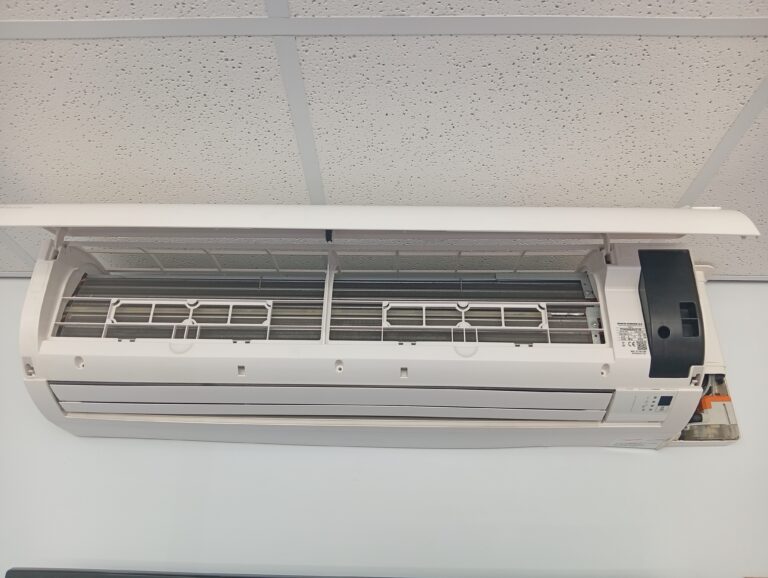
Wall Mounted Units
Wall-mounted systems can work well in:
- Smaller cafés
- Independent restaurants
- Staff rooms
- Offices
- Private dining areas
Although generally more affordable, they may not provide the same level of even airflow as larger commercial solutions in high-occupancy spaces.
Split and Multi-Split Systems
Split systems connect one indoor unit to one outdoor unit.
Multi-split systems allow several indoor units to connect to a single condenser, making them ideal where different zones require independent temperature control.
Benefits include:
- Flexible installation
- Improved zoning
- Lower installation costs than multiple standalone systems
- Independent thermostat settings
- Good energy efficiency
These systems are particularly useful where restaurants have separate front-of-house and back-of-house climate requirements.
When Is a VRF System the Best Choice?
As restaurants become larger and more operationally complex, traditional split systems may no longer offer the flexibility required.
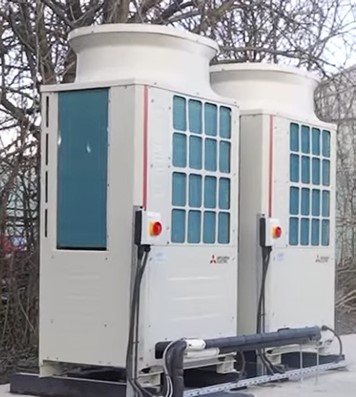
This is where Variable Refrigerant Flow (VRF) systems stand out.
Rather than supplying the same amount of cooling throughout the building, a VRF system continuously adjusts refrigerant flow to match demand in each zone. That means different areas of the restaurant can operate independently while remaining connected to a single outdoor unit.
For example:
- The dining area may require cooling during lunch service.
- A private function room might only need conditioning in the evening.
- Offices could require minimal cooling during opening hours.
- Staff facilities can operate on separate schedules.
This intelligent modulation helps improve energy efficiency while reducing unnecessary electricity consumption.
Restaurants with multiple floors, function spaces or changing occupancy often benefit from VRF technology because it offers excellent flexibility without sacrificing comfort.
Additional advantages include:
- Precise temperature control
- Reduced operational costs
- Quiet operation
- Excellent part-load efficiency
- Flexible future expansion
- Individual programmable controls for each zone
For businesses planning long-term growth, a modular VRF system can often provide a lower whole-life cost than installing several independent systems.
The Importance of Zoning
Restaurants rarely operate at full capacity across every room simultaneously.
Without zoning, the HVAC system treats every part of the building the same—even when conditions are completely different.
Imagine this scenario.
The restaurant is busy on Saturday evening.
- The dining room is full.
- The kitchen is producing significant heat.
- The office is empty.
- Upstairs private dining rooms aren’t in use.
Running every indoor unit equally wastes energy.
A properly zoned system allows each area to respond independently according to occupancy, ambient temperature and operating hours.
Typical restaurant zones include:
- Front of house
- Main dining room
- Bar area
- Commercial kitchen
- Food preparation areas
- Private dining rooms
- Offices
- Storage rooms
Not only does this improve customer comfort, but it also contributes to lower running costs and better lifecycle performance.
Modern smart thermostats and programmable controls make zoning straightforward while allowing operators to adjust temperatures throughout the day.
Don’t Overlook Indoor Air Quality
Many restaurant owners focus on cooling performance without considering what customers are actually breathing.
Indoor air quality has become one of the most important considerations for commercial premises, particularly within hospitality.
Cooking continuously releases:
- Moisture
- Airborne grease
- Vapours
- Particulate matter
- Odours
- Volatile Organic Compounds (VOCs)
Without adequate filtration and ventilation, these contaminants accumulate throughout the building.
A high-performing restaurant HVAC design should consider:
- Fresh air ventilation
- Air purification
- HEPA filtration where appropriate
- PM2.5 particle reduction
- CO₂ monitoring
- Air changes per hour (ACH)
- Airflow balancing
- Kitchen extraction efficiency
Maintaining healthy indoor air quality doesn’t just improve comfort—it can also contribute to a cleaner environment for both employees and guests.
When ventilation, extraction and cooling systems work together, the entire restaurant feels fresher, even during peak dining periods.
Energy Efficiency Should Be a Priority, Not an Afterthought
Restaurant air conditioning often operates for long hours every day.
Even relatively small improvements in efficiency can translate into substantial savings over the lifetime of the equipment.
Rather than focusing solely on installation costs, consider the total cost of ownership, including:
- Electricity consumption
- Reliability
- Preventative maintenance
- Replacement components
- Downtime
- Length of warranty.
- Expected equipment lifespan
Modern systems often include:
- Inverter technology
- Smart thermostats
- Wi-Fi controls
- Occupancy sensors
- Automated scheduling
- Cloud monitoring
- Predictive maintenance features
These technologies continuously adjust cooling output to match demand instead of operating at full capacity all day.
When comparing equipment, pay close attention to:
- SEER (Seasonal Energy Efficiency Ratio)
- SCOP (Seasonal Coefficient of Performance)
- Energy rating
- Cooling output
- Heating output
- Manufacturer warranty, length and what is covered
Although higher-efficiency equipment may require a larger upfront investment, the energy payback often makes it significantly more economical over its operational lifetime.
Why Preventative Maintenance Matters
Even the best commercial air conditioning system will lose efficiency if it isn’t properly maintained.
Restaurants are particularly demanding environments because airborne grease, dust and moisture place additional strain on filters, evaporators and condensers.
Without regular servicing, common problems include:
- Reduced airflow
- Declining cooling capacity
- Refrigerant issues
- Increased energy bills
- Noisy air conditioning
- Poor humidity control
- System breakdowns during peak service
A structured planned preventative maintenance (PPM) programme helps identify developing issues before they become costly repairs.
Routine maintenance typically includes:
- Cleaning filters and coils
- Checking refrigerant levels
- Inspecting electrical components
- Testing thermostat calibration
- Verifying airflow direction
- Cleaning condensate drains
- Examining outdoor units
- Confirming efficient system operation
Regular maintenance not only protects your investment but also helps preserve manufacturer warranties and supports ongoing F-Gas compliance.
Maintenance – spend a little – save a lot!
Think Beyond Air Conditioning Alone
Restaurants depend on several interconnected systems working together.
Cooling equipment cannot perform effectively if supporting infrastructure has been overlooked.
For example, refrigeration equipment produces a continuous heat load that directly affects indoor temperatures.
Whether operating cold rooms, display cabinets or food storage, commercial refrigeration should always be considered during HVAC design to avoid unnecessary strain on the cooling system.
Businesses planning a complete refurbishment often benefit from integrating commercial refrigeration solutions alongside air conditioning and ventilation, creating a coordinated approach to temperature management across the entire premises.
Similarly, restaurants catering for outdoor events, festivals or temporary hospitality spaces may require flexible cooling support beyond permanent installations. In these situations, refrigerated trailer hire can help maintain food quality and cold storage capacity during busy periods without overloading existing facilities.
Plan for Tomorrow, Not Just Today
It’s easy to choose a system that meets your current needs.
The better investment is choosing one that will still meet your requirements five or ten years from now.
Before finalising a specification, consider questions such as:
- Will seating capacity increase?
- Could the restaurant expand into neighbouring premises?
- Are private dining rooms planned in the future?
- Will operating hours change?
- Could additional refrigeration equipment be installed?
- Is a Building Management System (BMS) likely to be introduced later?
Designing with future expansion in mind can prevent expensive alterations further down the line and ensure your HVAC infrastructure continues to support your business as it grows.
Installation Matters Just as Much as the Equipment
Even the highest-performing commercial air conditioning system can fail to deliver if it’s installed incorrectly.
Successful restaurant HVAC installation begins long before the first indoor unit is mounted. A thorough design process should assess the building, understand how the restaurant operates, and identify opportunities to improve comfort while reducing energy use.
A professional installation typically includes:
- Detailed site survey
- Heat load calculation
- HVAC design consultation
- Equipment selection
- Airflow balancing
- Refrigerant pipework design
- Electrical requirements
- Condensate drainage planning
- Commissioning
- Final commissioning report
Attention to these details ensures the system performs as intended from day one rather than requiring adjustments after opening.
Where restaurants remain operational during refurbishment, careful planning can also minimise disruption to staff and customers.
Understanding Compliance and Industry Standards
Commercial HVAC installations in the UK must comply with several regulations designed to promote safety, efficiency and environmental responsibility.
Working with a qualified commercial HVAC installer helps ensure your project meets relevant requirements, including:
- Building Regulations
- F-Gas Regulations
- Electrical safety standards
- Manufacturer installation specifications
- Appropriate commissioning procedures
F-Gas compliance is particularly important because refrigerants must be handled by qualified engineers. Regular inspections and maintenance may also be required depending on the type and quantity of refrigerant within the system.
Beyond legal compliance, choosing energy-efficient equipment can contribute to lower carbon emissions, improved sustainability and reduced operating costs throughout the system’s lifespan.
Choosing the Right Commercial HVAC Contractor
Selecting the right equipment is only half the decision.
The company designing and installing it will have a significant impact on how well the system performs over the coming years.
Rather than comparing quotations based solely on price, consider whether the contractor:
- Carries out a full site survey
- Performs accurate heat load calculations
- Explains system sizing decisions
- Offers tailored solutions rather than standard packages
- Understands restaurant ventilation and kitchen extraction
- Provides ongoing servicing and maintenance
- Supplies clear warranties
- Has experience working in hospitality environments
A reputable contractor should also explain why a particular solution has been recommended, helping you understand the balance between upfront investment and long-term performance.
At Aircon Group, every project begins with understanding how your business operates. From independent cafés to large-scale restaurants, our approach focuses on designing practical climate control solutions that deliver reliable performance, energy efficiency and lasting value.
Looking Beyond Installation Costs
It’s natural to compare installation quotes, but the cheapest option isn’t always the most economical over time.
Instead, consider the broader financial picture.
Factors influencing return on investment include:
- Energy savings
- Maintenance costs
- Electricity consumption
- Equipment lifespan
- Reliability
- Warranty coverage
- Downtime prevention
- Staff productivity
- Customer satisfaction
For restaurants operating long hours every day, even modest improvements in efficiency can produce significant savings over several years.
A system with higher SEER and SCOP ratings, inverter technology and intelligent controls may have a higher purchase price, but lower operating costs can often offset that investment.
Evaluating whole-life cost rather than initial expenditure provides a far clearer indication of long-term value.
Common Mistakes to Avoid
Many restaurant owners make similar mistakes when purchasing commercial air conditioning.
Avoiding these pitfalls can save considerable time, money and frustration.
Choosing equipment based on price alone
Budget systems may appear attractive initially but often result in higher maintenance costs, reduced efficiency and shorter service life.
Ignoring ventilation
Cooling without sufficient fresh air ventilation can leave indoor spaces feeling stale and uncomfortable, regardless of temperature.
Undersizing or oversizing the system
Incorrect system sizing affects humidity control, comfort levels, energy efficiency and equipment longevity.
Forgetting future expansion
Installing a system with no capacity for growth may lead to expensive upgrades if the business expands.
Neglecting maintenance
Skipping routine maintenance often results in declining performance, increased electricity use and avoidable breakdowns.
Focusing only on the dining area
A comfortable restaurant depends on balancing conditions throughout the entire building, including kitchens, preparation areas, storage rooms and staff facilities.
Frequently Asked Questions
What is the best commercial air conditioner for a restaurant?
There isn’t a one-size-fits-all answer. The best solution depends on factors such as occupancy, restaurant layout, kitchen heat loads, ventilation requirements and future expansion plans. Professional system sizing is essential to determine the most suitable option. Go for a well known make.
Should restaurants use separate ventilation and air conditioning systems?
In most cases, yes. Air conditioning manages temperature, while ventilation introduces fresh air and removes heat, moisture and contaminants. Together they create a healthier and more comfortable indoor environment.
How often should commercial air conditioning be maintained?
Most restaurants benefit from planned preventative maintenance at least twice a year, although busy commercial kitchens or systems operating continuously may require more frequent servicing.
Can modern systems provide heating as well?
Yes. Many commercial heat pump systems deliver efficient heating and cooling, making them suitable for year-round climate control while reducing energy consumption compared with traditional heating methods.
Final Thoughts
A restaurant’s climate has a direct influence on customer satisfaction, staff wellbeing and day-to-day operations.
The right commercial air conditioning system should do far more than simply lower the temperature. It should maintain consistent comfort throughout changing seasons, manage humidity, improve indoor air quality, support effective ventilation and operate efficiently even during the busiest service periods.
By considering factors such as heat load calculation, system sizing, zoning, ventilation, energy efficiency, maintenance and future growth, restaurant owners can make informed decisions that continue to deliver value long after installation.
Whether you’re fitting out a brand-new venue, replacing ageing equipment or upgrading an existing HVAC system, taking a strategic approach helps reduce operational costs while creating a more enjoyable environment for both guests and staff.
Investing in a professionally designed commercial HVAC solution isn’t simply about cooling a building—it’s about supporting the long-term success of your restaurant through reliable, efficient and intelligent climate control.