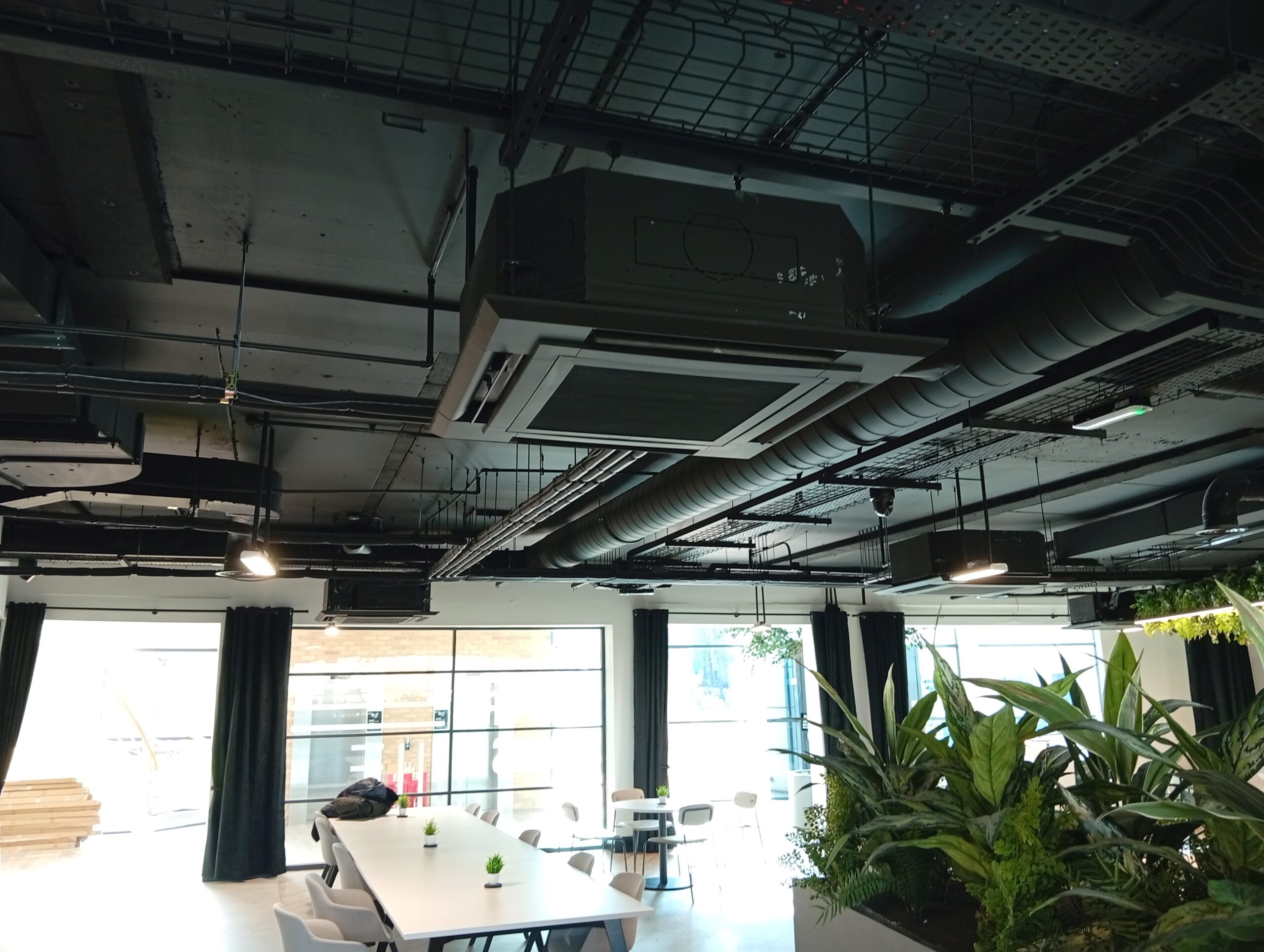
Commercial Air Conditioning Installation Services UK Guide
Commercial air conditioning installation is far more than simply fitting cooling equipment. A successful project requires careful site surveys, heat load calculations, HVAC system design, regulatory compliance, equipment selection, installation expertise, commissioning, and long-term maintenance planning. Whether you’re developing a new office, upgrading a warehouse, refurbishing retail premises, or managing a large-scale commercial fit-out, the right climate control strategy can significantly improve energy efficiency, workplace comfort, indoor air quality, and operational performance.
Modern commercial cooling systems increasingly integrate smart HVAC controls, building management systems (BMS), energy monitoring, demand-controlled ventilation, and low-carbon technologies to help businesses meet sustainability goals while reducing running costs. Understanding the installation process from initial design through to system handover is essential for achieving long-term value and reliability.
Why Commercial Air Conditioning Has Become Essential for UK Businesses
Today’s commercial environments demand far more than simple temperature control. Modern buildings require integrated climate control systems capable of maintaining thermal comfort, improving indoor environmental quality (IEQ), supporting occupant wellbeing, and delivering measurable energy savings.
Whether operating an office, warehouse, healthcare facility, retail space, hospitality venue, or industrial premises, organisations increasingly depend on commercial HVAC installation solutions to create productive and compliant working environments.
Businesses are facing growing pressure from:
- Rising energy costs
- Sustainability targets
- Net Zero building initiatives
- MEES compliance requirements
- Indoor air quality expectations
- Employee wellbeing considerations
- Increasing building performance standards
As a result, commercial air conditioning installation has evolved into a critical component of modern building services engineering.
For organisations seeking specialist climate control expertise, professional air conditioning installation services provide the foundation for efficient and reliable building performance.
A properly designed HVAC system should balance comfort, efficiency, compliance, and future scalability rather than simply delivering cooling capacity.
Understanding Commercial HVAC Installation
Commercial HVAC installation refers to the design, supply, installation, commissioning, and ongoing support of heating, ventilation, air conditioning, and refrigeration systems within commercial buildings.
Unlike domestic systems, commercial HVAC projects often involve:
- Complex HVAC design requirements
- Multiple occupancy zones
- Large cooling loads
- Ventilation strategies
- Building Management System (BMS) integration
- Advanced controls installation
- Extensive ductwork installation
- Mechanical and electrical (M&E) coordination
The scale and complexity of these projects demand detailed planning from the earliest stages.
Key Components Typically Included
Commercial systems often consist of:
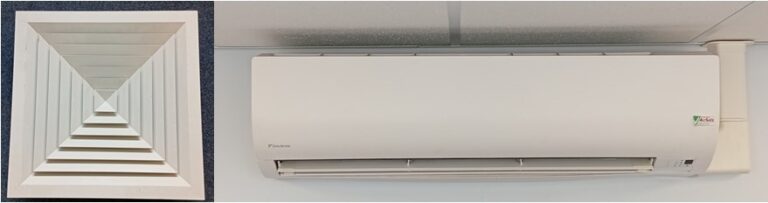
- Indoor units
- Outdoor condensers
- Air Handling Units (AHU)
- Fan Coil Units (FCUs)
- Refrigerant pipework
- Ductwork systems
- Electrical infrastructure
- Smart HVAC controls
- Air filtration equipment
- Building management systems
These elements work together to create consistent temperature control, effective air distribution, and improved indoor air quality.
In many facilities, commercial cooling integrates closely with dedicated ventilation systems to ensure adequate fresh air ventilation and healthy air exchange rates throughout occupied spaces.
The Commercial Air Conditioning Design Phase
The success of any installation project is largely determined before equipment even arrives on site.
Professional HVAC contractors UK-wide typically invest significant time in design and planning to ensure systems perform efficiently throughout their lifecycle.
Site Survey and Building Assessment
Every project begins with a comprehensive site survey and building assessment.
During this phase, engineers evaluate:
- Building size and layout
- Occupancy levels
- Existing mechanical services
- Heat-generating equipment
- Window orientation
- Solar gain
- Insulation performance
- Ventilation requirements
- Future expansion plans
This information forms the basis for accurate system design and capacity sizing.
Heat Load Calculations and Cooling Load Analysis
One of the most critical stages involves calculating cooling requirements.
Heat load calculations assess factors such as:
| Assessment Factor | Impact on Cooling Demand |
| Occupancy Density | Internal heat gains |
| Equipment Usage | Additional thermal load |
| Solar Gain | Increased cooling demand |
| Lighting Systems | Internal heat generation |
| Building Fabric | Heat transfer rates |
| Ventilation Requirements | Fresh air cooling loads |
Accurate cooling load calculations prevent two common problems:
- Oversized systems that waste energy
- Undersized systems that struggle to maintain comfort
Both scenarios negatively affect operational efficiency and long-term performance.
HVAC System Design Considerations
Modern HVAC system design extends beyond cooling alone.
Design engineers must consider:
- Airflow requirements
- Indoor environmental quality
- Air filtration
- Noise levels
- Energy efficiency
- Occupancy patterns
- Building regulations
- Sustainability targets
- Future maintenance access
The goal is to create climate control solutions that support both current and future operational requirements.
Selecting the Right Commercial Air Conditioning System
Not every building requires the same solution.
Equipment selection depends on building type, occupancy, cooling demands, and project objectives.
Split Systems
Split systems remain popular for smaller commercial environments because they offer:
- Cost-effective installation
- Reliable operation
- Straightforward maintenance
- Good energy efficiency
- Flexible positioning
They are commonly used in:
- Small offices
- Retail units
- Professional practices
- Hospitality venues
Multi-Split Systems
Multi-split systems allow multiple indoor units to connect to a single outdoor condenser.
Benefits include:
- Reduced external plant requirements
- Individual room control
- Improved aesthetics
- Greater installation flexibility
These systems are often selected for office refurbishment HVAC projects where space is limited.
VRF and VRV Systems
For larger commercial properties, VRF systems and VRV systems have become industry-leading solutions.
VRF technology enables:
- Simultaneous heating and cooling
- Precise zoning systems
- Exceptional energy efficiency
- Variable speed compressors
- Inverter technology
- Reduced operating costs
Applications commonly include:
- Multi-storey offices
- Hotels
- Educational facilities
- Healthcare buildings
- Commercial fit-out projects
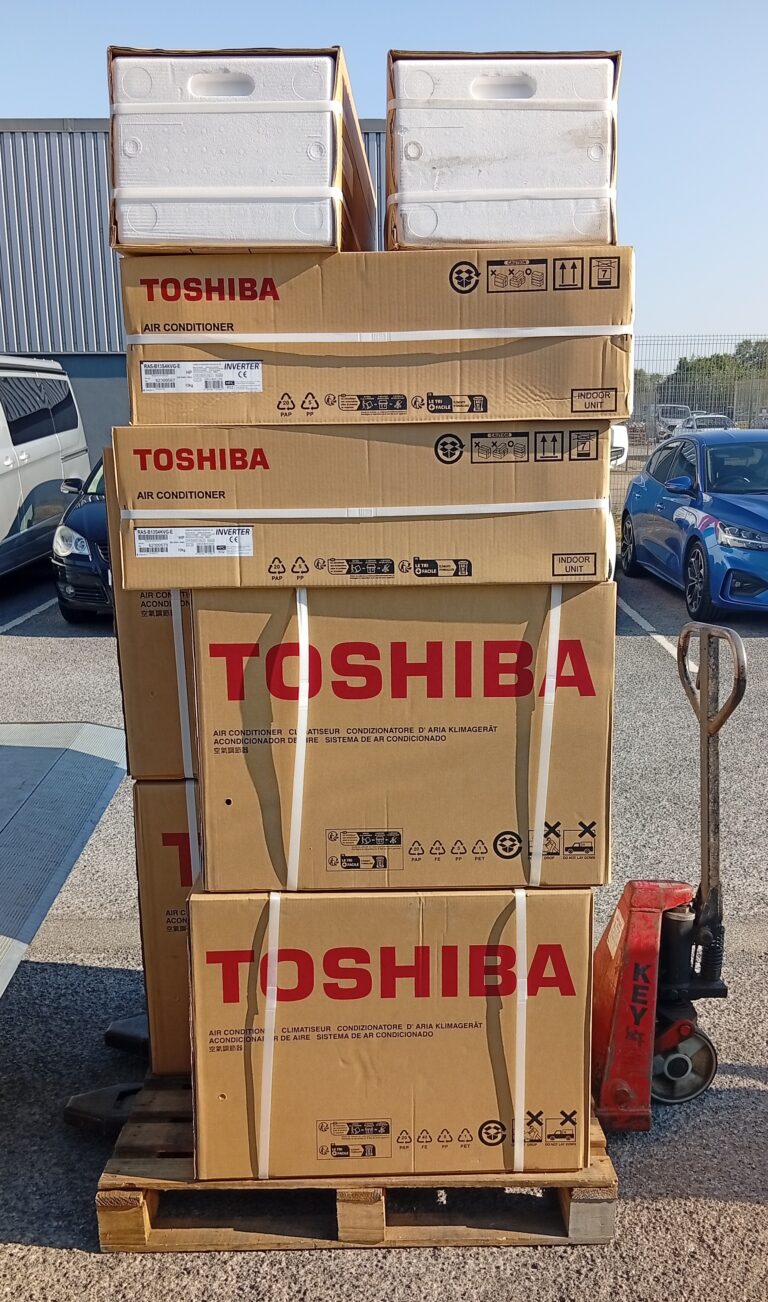
Manufacturers such as Mitsubishi Electric, and Toshiba continue to drive innovation within this sector.
Heat Pump Systems – modern AC systems are heat pumps
Heat pump systems are increasingly being adopted as part of wider decarbonisation strategies.
Advantages include:
- Renewable heating and cooling capability
- Reduced carbon emissions
- Lower energy consumption
- Improved EPC performance
- Support for Net Zero objectives
Many commercial developments now prioritise low-carbon HVAC technologies from the earliest design stages.
Integrating Refrigeration and Specialist Cooling Requirements
Some commercial facilities require more than standard comfort cooling.
Industries such as food production, pharmaceuticals, logistics, and hospitality often depend on specialist refrigeration systems alongside traditional HVAC infrastructure.
These environments require careful consideration of:
- Refrigerant regulations
- Temperature-sensitive storage
- Process cooling demands
- Environmental compliance
- System redundancy
- Asset protection
For facilities operating temperature-controlled environments, specialist commercial refrigeration solutions often form a critical part of the wider mechanical services strategy.
Commercial Sectors Requiring Advanced HVAC Solutions
Commercial air conditioning installation projects vary significantly depending on building use.
Some of the most common sectors include:
Office Air Conditioning Installation
Modern offices prioritise:
- Occupant wellbeing
- Thermal comfort
- Air quality monitoring
- Productivity improvements
- Smart controls
- Hybrid working flexibility
Retail HVAC Installation
Retail environments focus on:
- Customer comfort
- Energy efficiency
- Seasonal demand management
- Consistent climate control
Warehouse Cooling Systems
Warehouses often require:
- Large-scale air distribution
- Demand-controlled ventilation
- Temperature zoning
- High-efficiency cooling equipment
Healthcare HVAC
Healthcare facilities demand:
- Enhanced air filtration
- Strict compliance standards
- Controlled environmental conditions
- Reliable system performance
Each sector requires unique HVAC design considerations and project planning methodologies.
The Commercial Air Conditioning Installation Process Explained
Once system design, technical specifications, and equipment selection have been completed, the project moves into the installation phase. This is where planning, coordination, and engineering expertise combine to transform a design concept into a fully operational climate control solution.
For larger developments, the installation process is often integrated into wider construction programmes and requires close collaboration between architects, consultants, contractors, and building owners.
Pre-Installation Planning
Before any equipment installation begins, project teams typically undertake:
- Design coordination meetings
- M&E coordination reviews
- Site logistics planning
- Risk assessments
- Health and Safety compliance checks
- Procurement scheduling
- Installation sequencing
This stage helps minimise delays and ensures that all building requirements have been properly addressed.
In new build installation projects, HVAC systems are frequently coordinated alongside electrical infrastructure, plumbing services, fire protection systems, and building management technologies.
Pipework Installation and Refrigerant Infrastructure
One of the most important installation stages involves refrigerant pipework.
This network connects indoor units to outdoor condensers and enables the transfer of refrigerant gas throughout the system.
Professional installers focus on:
- Correct pipe sizing
- Pressure testing
- Leak prevention
- Insulation installation
- Compliance with F-Gas Regulations
- Long-term reliability
Improper refrigerant pipework installation can significantly reduce energy efficiency and negatively affect system performance.
Ductwork Installation and Air Distribution
Many commercial cooling systems depend on carefully designed ductwork to distribute conditioned air throughout the building.
Effective air distribution plays a crucial role in:
- Thermal comfort
- Air exchange rates
- Indoor air quality
- Occupant wellbeing
- Operational efficiency
Common ducted solutions include:
| System Type | Typical Application |
| Ducted systems | Offices and commercial buildings |
| Air Handling Units (AHU) | Large-scale facilities |
| Fan Coil Units (FCUs) | Zoned environments |
| Packaged air conditioning | Retail and industrial premises |
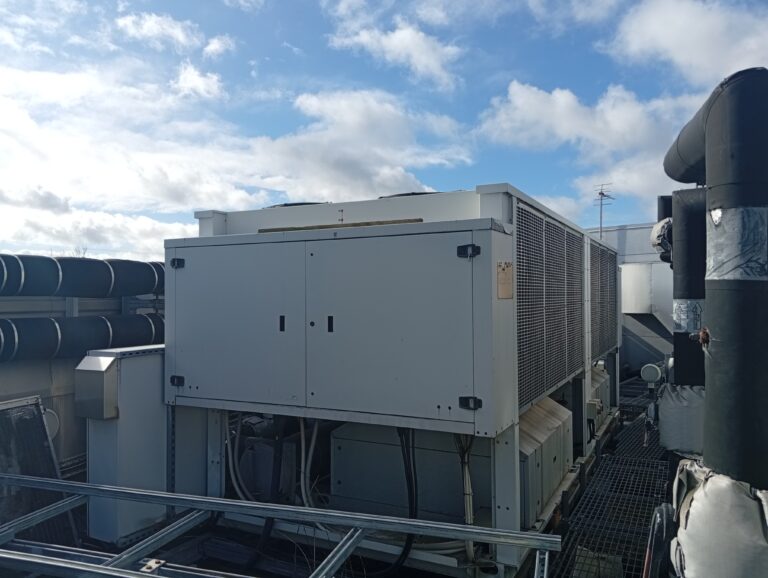
| Rooftop units | Warehouses and logistics centres |
Poor airflow design can result in hot spots, uneven cooling, excessive energy consumption, and reduced occupant satisfaction.
Electrical Installation and Controls Integration
Commercial HVAC installation also involves substantial electrical work.
This includes:
- Power supplies
- Distribution boards
- Control wiring
- Communication networks
- Sensor installation
- BMS integration
Modern systems increasingly incorporate:
- Smart HVAC controls
- Occupancy control
- Temperature control systems
- HVAC automation
- Remote monitoring
- Energy monitoring systems
The objective is not only to cool a building effectively but also to optimise performance through intelligent system management.
Smart Building Technologies and Modern HVAC Innovation
The commercial HVAC sector has undergone significant technological transformation over the past decade.
Businesses now expect systems to provide real-time insights into building performance while helping reduce energy consumption and maintenance costs.
Building Management Systems (BMS)
A Building Management System (BMS) acts as the central control platform for a building’s mechanical and electrical services.
A properly configured BMS can manage:
- Cooling systems
- Heating systems
- Ventilation systems
- Lighting controls
- Energy monitoring
- Air quality monitoring
Benefits include:
- Reduced energy waste
- Enhanced operational efficiency
- Improved occupant comfort
- Automated reporting
- Better asset management
IoT HVAC Monitoring
Internet-connected HVAC systems have become increasingly common in commercial buildings.
IoT HVAC monitoring allows facility managers to:
- Monitor performance remotely
- Identify faults early
- Track energy consumption
- Analyse occupancy trends
- Improve maintenance planning
These technologies support predictive maintenance strategies, reducing costly downtime and extending system lifespan.
Digital Commissioning and System Verification
Digital commissioning tools are helping contractors improve installation accuracy and project transparency.
Benefits include:
- Faster testing procedures
- Enhanced quality assurance
- Improved system verification
- Detailed performance records
- Better handover documentation
As commercial buildings become more sophisticated, digital commissioning is rapidly becoming a standard component of major projects.
Compliance, Regulations, and Industry Standards
Commercial HVAC projects in the UK must comply with a wide range of regulations and industry requirements.
Failure to meet these obligations can lead to penalties, operational disruption, and increased project costs.
F-Gas Regulations
F-Gas Regulations govern the use, handling, and maintenance of refrigerant gases used within commercial air conditioning systems.
Key requirements include:
- Certified personnel
- Leak detection procedures
- Record keeping
- Responsible refrigerant management
- Environmental compliance
Businesses should ensure that all installation and maintenance work is carried out by appropriately qualified air conditioning engineers.
Building Regulations
Commercial HVAC projects must satisfy Building Regulations relating to:
- Energy efficiency
- Ventilation
- Fire safety
- Electrical safety
- Building performance
Design teams must ensure compliance throughout every stage of the project lifecycle.
TM44 Inspections
Many air conditioning systems with effective rated outputs exceeding specified thresholds require TM44 inspections.
These inspections help organisations:
- Improve energy efficiency
- Reduce running costs
- Identify upgrade opportunities
- Meet legal obligations
TM44 assessments often reveal opportunities for system optimisation and carbon reduction.
Energy Performance and ESG Considerations
Increasingly, commercial property owners are considering HVAC systems as part of broader sustainability strategies.
Key drivers include:
- Energy Performance Certificate (EPC) ratings
- MEES compliance
- Carbon reporting obligations
- Net Zero targets
- Corporate ESG commitments
Modern HVAC design now plays a central role in helping businesses achieve environmental objectives while maintaining operational performance.
The most cost-effective commercial HVAC systems are often those designed with long-term energy performance and sustainability in mind rather than solely focusing on upfront installation costs.
Commissioning: Turning Equipment into a High-Performance System
Installing equipment is only part of the journey.
Without proper system commissioning, even the most advanced commercial cooling systems may fail to deliver expected performance.
Commissioning ensures that every component operates exactly as intended.
What Happens During Commissioning?
Typical commissioning activities include:
- Performance testing
- Functional testing
- Control calibration
- Airflow balancing
- Refrigerant checks
- Electrical verification
- Safety inspections
- Operational validation
The commissioning process confirms that the system satisfies both design intent and operational requirements.
System Verification and Quality Assurance
Quality assurance procedures help verify:
- Cooling capacity (kW)
- Airflow performance
- Temperature consistency
- Control functionality
- Energy efficiency targets
- Safety compliance
Detailed records are often produced to support future maintenance and warranty protection.
Handover Documentation and User Training
Once commissioning has been completed, project teams provide handover documentation covering:
- Operating manuals
- Maintenance schedules
- Compliance certificates
- System drawings
- Warranty information
User training is equally important.
Facilities teams must understand how to operate:
- Smart controls
- BMS interfaces
- Energy monitoring systems
- Zoning controls
- Ventilation settings
Well-trained operators can significantly improve long-term system performance and reduce avoidable energy waste.
Managing HVAC Installations During Commercial Fit-Out Projects
Commercial fit-out projects often present unique challenges.
Unlike new developments, existing buildings may have:
- Space constraints
- Existing services infrastructure
- Occupied working environments
- Restricted access
- Tight project deadlines
Successful installations depend on effective planning and coordination with the principal contractor and wider project team.
Businesses undertaking temporary cooling requirements during refurbishment or infrastructure upgrades may also benefit from specialist refrigerated trailer hire solutions to support operational continuity where temperature-sensitive products or equipment are involved.
Common Fit-Out Challenges
Project teams frequently encounter:
- Ceiling void limitations
- Existing ductwork conflicts
- Legacy electrical systems
- Structural restrictions
- Phased occupancy requirements
Addressing these challenges early helps avoid delays during installation and commissioning.
The Role of Energy Efficiency in Commercial HVAC Design
Energy efficiency is no longer simply a desirable feature.
For many organisations, it has become a business-critical requirement.
Modern commercial HVAC services increasingly focus on reducing:
- Energy consumption
- Carbon emissions
- Running costs
- Operational waste
At the same time, systems must continue delivering exceptional indoor environmental quality and occupant comfort.
In the final part of this guide, we’ll explore long-term maintenance strategies, planned preventative maintenance (PPM), lifecycle management, common installation mistakes, future HVAC trends, and how businesses can maximise return on investment from their commercial air conditioning systems.
Planned Preventative Maintenance and Long-Term System Performance
The success of a commercial air conditioning installation does not end at handover.
Even the most advanced HVAC systems require ongoing attention to maintain efficiency, reliability, and compliance throughout their operational lifespan.
This is where Planned Preventative Maintenance (PPM) becomes essential.
Rather than reacting to breakdowns after they occur, preventative maintenance focuses on identifying potential issues before they affect business operations.
Why Planned Preventative Maintenance Matters
Regular HVAC maintenance helps organisations:
- Reduce unexpected downtime
- Improve energy efficiency
- Extend equipment lifespan
- Protect warranty coverage
- Maintain indoor air quality
- Support compliance requirements
- Minimise repair costs
- Improve operational reliability
For many businesses, the cost of a well-managed maintenance programme is significantly lower than the financial impact of an unexpected system failure.
Typical PPM Activities
A comprehensive maintenance programme may include:
| Maintenance Activity | Purpose |
| Filter inspections | Maintain airflow and air quality |
| Refrigerant checks | Ensure system efficiency |
| Electrical testing | Improve reliability and safety |
| Coil cleaning | Maintain heat transfer performance |
| Sensor calibration | Ensure accurate controls |
| Fan inspections | Prevent airflow issues |
| Condensate system checks | Reduce water-related faults |
| Control testing | Verify automation functionality |
These inspections help maintain peak performance throughout the system lifecycle.
Asset Management and Lifecycle Planning
Commercial HVAC systems represent a significant capital investment.
Forward-thinking organisations treat HVAC infrastructure as a strategic asset rather than simply a building expense.
Effective asset management involves:
- Performance monitoring
- Maintenance scheduling
- Energy analysis
- Upgrade planning
- Risk assessment
- Capital expenditure forecasting
This approach helps building owners make informed decisions regarding repairs, refurbishments, and eventual replacements.
Understanding System Lifecycle Expectations
Different system types have varying operational lifespans.
Typical ranges include:
- Split systems: 10–15 years
- Multi-split systems: 12–18 years
- VRF systems: 15–20 years
- Air Handling Units: 15–25 years
- Chiller systems: 20–30 years
Actual performance depends heavily on:
- Installation quality
- Maintenance standards
- Operating conditions
- Environmental factors
- Usage intensity
A properly maintained system can often exceed expected service life while maintaining strong performance.
Common Commercial Air Conditioning Installation Mistakes
Despite advances in technology and project management, many commercial buildings continue to experience avoidable HVAC issues.
Understanding these common mistakes can help organisations achieve better outcomes from the outset.
Incorrect Capacity Sizing
One of the most frequent errors involves inaccurate cooling load calculations.
Oversized systems can cause:
- Excessive cycling
- Higher energy consumption
- Reduced humidity control
- Increased wear and tear
Undersized systems may result in:
- Poor comfort levels
- Reduced productivity
- Constant operation
- Premature component failure
Accurate heat load calculations remain one of the most important aspects of HVAC design.
Poor Ventilation Strategy
Cooling alone does not create a healthy indoor environment.
Without sufficient fresh air ventilation, buildings can suffer from:
- Elevated CO₂ levels
- Poor indoor air quality
- Occupant discomfort
- Reduced cognitive performance
Effective commercial ventilation systems should be considered alongside cooling requirements from the earliest design stage.
Ignoring Future Expansion
Many businesses underestimate future growth.
Failing to account for expansion can create challenges such as:
- Insufficient cooling capacity
- Limited infrastructure flexibility
- Expensive retrofit requirements
- Operational disruption
Scalable HVAC design can provide significant long-term benefits.
Prioritising Cost Over Performance
While budget considerations are important, selecting equipment based solely on upfront cost can prove expensive over time.
Decision-makers should evaluate:
- Seasonal Energy Efficiency Ratio (SEER)
- Coefficient of Performance (COP)
- Maintenance requirements
- Reliability history
- Energy consumption
- Total cost of ownership
The most economical solution is often the system that delivers the greatest lifecycle value.
Sustainability, Decarbonisation, and the Future of Commercial HVAC
The UK commercial property sector is undergoing a significant transformation.
Building owners, investors, and occupiers are increasingly focusing on decarbonisation and sustainability objectives.
HVAC systems sit at the centre of this transition.
Low-Carbon HVAC Technologies
Modern installations increasingly incorporate:
- Heat pumps
- Variable speed compressors
- Inverter technology
- Heat recovery systems
- Renewable heating and cooling solutions
- Smart HVAC controls
These technologies help reduce both energy consumption and carbon emissions.
Building Energy Management
Commercial buildings are becoming more data-driven.
Energy monitoring systems now provide detailed insights into:
- Equipment performance
- Occupancy patterns
- Energy usage trends
- Carbon reduction opportunities
- System optimisation potential
Combined with HVAC automation and remote monitoring capabilities, these tools support more intelligent building management strategies.
Healthy Buildings and Occupant Wellbeing
The concept of healthy buildings continues to gain momentum.
Modern HVAC systems contribute to:
- Improved indoor environmental quality (IEQ)
- Better air filtration
- Enhanced thermal comfort
- Improved air quality monitoring
- Greater occupant wellbeing
Businesses increasingly recognise that environmental conditions can directly influence employee satisfaction, productivity, and retention.
Emerging Trends Shaping Commercial Air Conditioning
The next generation of commercial HVAC services will likely be influenced by several key developments.
Predictive Maintenance
Advanced analytics and connected equipment allow engineers to identify developing issues before they become failures.
Benefits include:
- Reduced downtime
- Lower repair costs
- Improved reliability
- Longer equipment life
Demand-Controlled Ventilation
Demand-controlled ventilation systems automatically adjust airflow based on occupancy and air quality conditions.
Advantages include:
- Reduced energy consumption
- Better indoor air quality
- Improved operational efficiency
Greater Integration with Smart Buildings
Future systems will increasingly communicate with:
- Building Management Systems
- Lighting controls
- Security systems
- Occupancy sensors
- Energy management platforms
This integrated approach supports smarter and more efficient building operation.
Digital Building Performance
As digital technologies continue to evolve, commercial buildings will increasingly utilise:
- Real-time performance dashboards
- Automated reporting
- AI-assisted optimisation
- Predictive energy management
- Remote diagnostics
These developments are helping organisations move from reactive management towards continuous optimisation.
Choosing the Right Commercial Air Conditioning Contractors
Selecting the right installation partner can have a significant impact on project success.
Businesses should seek commercial air conditioning contractors that demonstrate expertise in:
- Commercial HVAC installation
- HVAC system design
- Project management
- Compliance requirements
- Commissioning procedures
- Long-term maintenance support
Questions worth asking include:
- What experience do they have within your sector?
- Do they provide turnkey installation services?
- Can they support ongoing maintenance?
- Are their engineers fully certified?
- Do they offer energy efficiency guidance?
- Can they support future expansion plans?
A reputable contractor should be able to demonstrate both technical competence and a clear understanding of business objectives.
Final Thoughts
Commercial air conditioning installation is a sophisticated process that extends far beyond equipment installation.
Successful projects combine detailed planning, accurate heat load calculations, robust HVAC design, quality installation practices, regulatory compliance, intelligent controls, thorough commissioning, and proactive maintenance.
From office air conditioning installation and retail HVAC installation through to warehouse cooling systems, healthcare HVAC environments, industrial climate control applications, and server room air conditioning projects, every building presents unique requirements that must be carefully addressed.
Organisations that invest in properly designed climate control systems often benefit from:
- Improved workplace comfort
- Better indoor air quality
- Increased productivity
- Reduced running costs
- Enhanced sustainability performance
- Lower carbon emissions
- Improved asset longevity
As technologies such as heat pumps, smart HVAC controls, IoT HVAC monitoring, predictive maintenance, and advanced building management systems continue to evolve, commercial buildings will become increasingly efficient, intelligent, and environmentally responsible.
For businesses seeking dependable climate control solutions, partnering with experienced specialists such as Aircon Group can help ensure systems are designed, installed, and maintained to deliver long-term operational value, energy efficiency, and reliable performance.
Key Takeaways
- Commercial HVAC installation begins with detailed site surveys and system design.
- Accurate cooling load calculations are critical for performance and efficiency.
- VRF systems, heat pumps, and smart controls are becoming increasingly popular across UK commercial buildings.
- Compliance with F-Gas Regulations, Building Regulations, and TM44 requirements remains essential.
- Proper commissioning ensures systems operate as intended from day one.
- Planned preventative maintenance protects efficiency, reliability, and warranty coverage.
- Sustainability, decarbonisation, and smart building technologies are shaping the future of commercial HVAC.
- Long-term lifecycle value should always take precedence over short-term installation cost savings.
By understanding the complete installation journey, businesses can make informed decisions that support both immediate operational requirements and future growth objectives.
Frequently Asked Questions
1. How much does commercial air conditioning installation cost in the UK?
The cost of commercial air conditioning installation varies significantly depending on factors such as building size, cooling capacity requirements, system type, accessibility, and project complexity. Small commercial installations may cost a few thousand pounds, while large-scale VRF systems, chiller systems, or multi-zone climate control solutions can require substantially higher investment. A professional site survey and detailed quotation are usually required to determine accurate costs.
2. Can commercial air conditioning be installed in occupied buildings?
Yes. Many commercial HVAC installation projects are completed while businesses continue operating. Experienced contractors often schedule works outside business hours, implement phased installations, and use temporary cooling solutions where necessary to minimise disruption to staff, customers, and day-to-day operations.
3. What is the best commercial air conditioning system for office buildings?
The most suitable system depends on the building’s layout, occupancy levels, and operational requirements. However, VRF systems, heat pump systems, ceiling cassette units, and ducted systems are commonly chosen for office environments due to their energy efficiency, zoning capabilities, and ability to maintain consistent workplace comfort.
4. How noisy are commercial air conditioning systems?
Modern commercial cooling systems are significantly quieter than older models. Advances in inverter technology, variable speed compressors, acoustic insulation, and equipment design help minimise operational noise. Proper system design and equipment placement also play a major role in reducing sound levels within occupied spaces.
5. Can a commercial HVAC system improve employee productivity?
Yes. Studies consistently show that maintaining comfortable temperatures, good ventilation, and high indoor air quality can positively impact concentration, cognitive performance, wellbeing, and productivity. Effective climate control solutions help create healthier and more comfortable working environments for building occupants.
6. Is commercial air conditioning tax deductible for businesses?
In many cases, commercial air conditioning systems may qualify for capital allowances or other tax-related benefits depending on the nature of the installation and current HMRC regulations. Businesses should consult a qualified accountant or tax advisor for guidance specific to their circumstances.
7. Can air conditioning help reduce humidity in commercial buildings?
Yes. Commercial air conditioning systems naturally remove excess moisture from the air during the cooling process. Effective humidity control can improve comfort, protect equipment, reduce condensation issues, and help maintain healthier indoor environments, particularly in offices, retail spaces, and healthcare facilities.
8. What should businesses do if their cooling requirements change in the future?
A well-designed HVAC system should allow for future expansion where possible. If cooling demands increase due to business growth, changes in occupancy, or additional equipment, system upgrades, additional indoor units, capacity enhancements, or controls modifications may be possible depending on the existing infrastructure.
9. Are commercial air conditioning systems environmentally friendly?
Modern systems are significantly more environmentally responsible than previous generations. High-efficiency heat pumps, low-carbon HVAC technologies, smart HVAC controls, energy monitoring systems, and newer refrigerants all contribute to reduced energy consumption and lower carbon emissions. Selecting energy-efficient equipment is key to maximising environmental benefits.
10. How can businesses compare commercial air conditioning installation quotes?
When reviewing quotations, businesses should evaluate more than just the initial price. Important considerations include:
- Equipment specifications
- Energy efficiency ratings
- Warranty coverage
- Installation methodology
- Commissioning procedures
- Maintenance support
- Compliance certifications
- Project timelines
- Contractor experience
The most competitive quote is not always the one with the lowest upfront cost. Long-term performance, reliability, and lifecycle value should also be considered when making a decision.