How Often Should Air Conditioning Be Serviced in the UK
Regular air conditioning maintenance is essential for maintaining system efficiency, lowering energy bills and preventing unexpected breakdowns. Most commercial air conditioning systems often require servicing every three to six months depending on usage, occupancy and operating conditions. Routine maintenance also maintains manufacturer warranty, improves indoor air quality, reduces wear on critical components and ensures compliance with UK regulations for larger systems. In this guide, we’ll explain recommended maintenance intervals, what happens during professional maintenance, legal responsibilities/compliance for UK businesses and how preventative maintenance protects your investment.
How Often Should Air Conditioning Be Maintained in the UK?
An air conditioning system is one of those modern conveniences that often goes unnoticed—until it stops working on the hottest day of the year or refuses to provide warmth during winter.
Like any mechanical equipment, even the highest-quality air conditioning unit requires regular maintenance to continue operating safely and efficiently. Dust accumulates, filters become clogged, refrigerant levels can leak over time and electrical components naturally experience wear. Left unchecked, these seemingly minor issues gradually reduce cooling performance, increase energy consumption and shorten the overall equipment lifecycle.
The good news is that most problems can be reduced with a sensible air conditioning maintenance schedule.
For commercial HVAC systems, routine maintenance isn’t simply about fixing faults. Instead, it’s about keeping equipment operating at peak efficiency while reducing long-term ownership costs.
If you’re considering installing a new system or upgrading an existing one, our professional Air Conditioning Services team can help you choose the right solution while providing ongoing maintenance support.
The General Rule for Air Conditioning Maintenance
While every installation is different, there are widely accepted servicing intervals that apply across most UK properties.
| Property Type | Recommended Service Frequency |
| Dusty environments | 3-4 months |
| Small offices with daily use | Every 6 months |
| Small commercial premises | Every 6 months |
| Offices & retail premises | Every 6–12 months |
| High-use commercial environments | Quarterly or more frequently |
These recommendations are influenced by several factors, including:
- Daily operating hours
- Indoor air quality
- Occupancy levels
- Dust and airborne contaminants
- Manufacturer servicing requirements
- Type of air conditioning system
- Environmental conditions
- Warranty conditions
For example, a wall-mounted air conditioning unit used only during the summer months has very different servicing needs compared to VRF systems operating around the clock in a busy office.
Likewise, hospitality venues, healthcare facilities and industrial premises often adopt planned preventative maintenance (PPM) programmes to minimise downtime and maintain operational reliability throughout the year.
Regular maintenance is significantly less expensive than repairing a neglected air conditioning system after a major component failure.
Why Annual Air Conditioning Maintenance Matters
Many people assume an air conditioner either works or it doesn’t.
In reality, performance slowly declines over time.
An air conditioning system may continue cooling a room while silently consuming more electricity, placing additional strain on the compressor and circulating dust throughout the building.
Professional AC maintenance addresses these issues before they become expensive repairs.
Some of the biggest benefits include:
- Improved energy efficiency
- Lower energy bills
- Reduced running costs
- Better airflow
- Cleaner air
- Improved indoor air quality
- Reduced carbon footprint
- Longer equipment lifespan
- Improved cooling performance
- Improved heating performance
- Prevention of unexpected breakdowns
- Protection of manufacturer warranty
- Healthier indoor environment
- Greater system reliability
Routine maintenance also contributes to sustainable cooling by reducing unnecessary energy consumption and helping systems operate closer to their designed seasonal efficiency.
What Happens During an Air Conditioning Maintenance?
A professional air conditioning engineer performs much more than a simple visual inspection.
A comprehensive air conditioning service typically includes preventative maintenance across every major component of the system.
Typical maintenance tasks include:
- Clean air filters or replace air filters where necessary.
- Evaporator coil cleaning.
- Condenser coil cleaning.
- Inspection of refrigerant gas levels.
- Refrigerant leak detection as per F-gas regulations
- Checking refrigerant pressure.
- Testing airflow throughout the system.
- Inspecting electrical connections.
- Electrical safety checks.
- Thermostat calibration.
- Cleaning the condensate drain.
- Inspection of the condensate pump.
- Fan motor inspection.
- Compressor performance testing.
- Inspection for mould prevention and bacteria build-up.
- Lubrication of moving components where applicable.
- Checking system controls and operating efficiency.
This thorough inspection allows engineers to identify developing faults long before they affect cooling capacity or heating performance.
Rather than waiting for an expensive repair, preventative maintenance enables small issues to be corrected while they’re still inexpensive to resolve.
How Usage Affects Service Frequency
Not every air conditioning system experiences the same level of wear.
A split air conditioner installed in a meeting may operate only a few hours each week, whereas office air conditioning can run ten or more hours every working day.
As operating hours increase, so does the need for regular servicing.
Factors that increase maintenance requirements include:
- Continuous daily operation
- High occupancy buildings
- Dusty environments
- Retail premises
- Commercial kitchens
- Manufacturing facilities
- Hospitality venues
- Buildings with poor ventilation
- High cooling loads
- Systems providing both heating and cooling
Where ventilation systems work alongside air conditioning equipment, maintaining both systems together helps preserve indoor air quality, improve airflow and create a healthier workplace. Discover how our Ventilation Services support efficient climate control and cleaner indoor environments.
Why Preventative Maintenance Is Better Than Reactive Repairs
It’s easy to postpone servicing when an air conditioning unit appears to be working normally.
However, many faults develop gradually.
Dust slowly coats evaporator coils.
Condenser coils lose efficiency.
Filters become increasingly blocked.
Electrical connections loosen over time.
Refrigerant charge can reduce through very small leaks.
None of these issues immediately stop a system working—but together they reduce performance and increase running costs month after month.
Preventative maintenance identifies these issues before they develop into expensive failures.
Rather than replacing major components such as compressors or fan motors, relatively inexpensive servicing keeps systems operating efficiently throughout their asset lifecycle.
This approach also supports condition-based maintenance, where equipment is monitored and maintained according to its operating condition rather than waiting for failure.
Investing in routine maintenance isn’t simply paying for maintenance—it’s protecting the long-term value of your air conditioning investment.
Warning Signs Your Air Conditioning Needs a Service Call
Even if your next scheduled service is months away, certain symptoms shouldn’t be ignored.
These often indicate that the system requires immediate inspection by a certified air conditioning engineer.
Reduced Cooling Performance
If rooms are taking longer to cool or never quite reach the desired temperature, restricted airflow, dirty coils or low refrigerant levels may be responsible.
Poor Airflow
Weak airflow often indicates clogged filters, blocked coils or problems with the fan motor.
Left unresolved, restricted airflow forces the entire air conditioning system to work harder, increasing energy consumption.
Unusual Noises
Grinding, rattling, buzzing or knocking noises are never considered normal.
They may indicate worn bearings, loose electrical components or compressor issues.
Water Leaks
Water around an indoor unit frequently results from blocked condensate drains or a faulty condensate pump.
Ignoring leaks can lead to internal water damage and mould growth.
Bad Smells
Persistent unpleasant odours can be caused by bacteria build-up, mould inside the system or contaminated filters.
Professional cleaning helps restore cleaner air while improving indoor air quality.
Increased Energy Bills
One of the earliest warning signs is often found on your electricity bill.
As system efficiency declines, energy usage increases—even if occupants notice little difference in cooling.
Short Cycling
If an air conditioning unit repeatedly switches on and off after only short periods, there may be thermostat problems, refrigerant issues or electrical faults that require investigation.
Understanding UK Regulations for Commercial Air Conditioning
Beyond routine maintenance, some commercial property owners also have legal responsibilities.
If an air conditioning system has an effective rated output of over 12kW, it falls within the scope of the Energy Performance of Buildings Regulations.
These regulations require periodic air conditioning inspections to assess energy efficiency and identify opportunities for improving system performance.
The resulting inspection report may include recommendations relating to:
- Cooling capacity
- Equipment maintenance
- System controls
- Energy efficiency assessment
- Cooling load
- Building compliance
- Environmental compliance
These inspections are typically carried out by an accredited or certified energy assessor and are generally required every five years.
It’s important to understand that a TM44 inspection is not a replacement for routine air conditioning servicing.
A TM44 inspection assesses efficiency and compliance, whereas professional maintenance focuses on keeping equipment operating safely and reliably.
Both have an important role in managing commercial HVAC systems.
The staff at the Aircon Group can advise you if you require a TM44. Sometimes Premises management software will flag a noncompliance if you don’t have a TM44 certificate even if your total power level is less than 12kW.
Does Maintenance Help Reduce Running Costs?
Absolutely.
An unmaintained air conditioning system must work harder to achieve the same indoor temperature.
Dirty coils reduce heat transfer.
Blocked filters restrict airflow.
Low refrigerant pressure forces compressors to operate for longer periods.
The cumulative effect is higher electricity consumption and reduced seasonal efficiency.
Routine servicing helps restore:
- Peak efficiency
- Better airflow
- Maximum cooling performance
- Reliable heating performance
- Lower running costs
- Reduced carbon emissions
- Sustainable cooling
- Improved energy savings
For businesses operating multiple systems, even modest improvements in efficiency can produce significant long-term reductions in operating costs.
Organisations with refrigeration equipment alongside their HVAC systems often benefit from coordinating maintenance schedules. Learn more about our Refrigeration Services and how integrated servicing can improve equipment reliability across your entire operation.
How Much Does Air Conditioning Maintenance Cost in the UK?
One of the most common questions property owners ask is whether regular maintenance is worth the investment.
In almost every case, the answer is yes.
The cost of an annual air conditioning maintenance is usually far lower than the cost of repairing or replacing major components that fail due to neglect. Compressors, fan motors, electrical components and refrigerant-related repairs can all become significantly more expensive than routine maintenance.
Several factors influence the overall air conditioning service cost, including:
- The size of the air conditioning system
- The number of indoor and outdoor units
- Are units hard to reach, like high on walls – cherry picker required
- Ease of access
- Type of equipment (split systems, multi-split systems, VRF systems or ducted systems)
- Whether replacement parts are required
- The frequency of scheduled maintenance
Commercial air conditioning servicing cost is often lower over the long term when businesses invest in a maintenance contract, as routine inspections help identify small issues before they develop into major faults.
Is a Maintenance Contract Worth It?
For commercial premises, the answer is often a resounding yes.
A maintenance contract provides structured, planned preventative maintenance (PPM) rather than relying on reactive call-outs when something goes wrong.
Typical maintenance agreements may include:
- Scheduled planned maintenance visits
- Air conditioning inspections
- Priority response for breakdowns
- Performance testing
- Electrical safety checks
- Refrigerant leak testing
- Maintenance records
- Equipment performance monitoring
- Compliance support
- Preventative maintenance recommendations
Businesses benefit from improved operational reliability while reducing the likelihood of costly downtime.
For organisations operating multiple properties, maintenance planning also makes budgeting far more predictable throughout the year.
Simple Task You Can Do Between Professional Services
Although professional servicing is essential, there are several straightforward tasks that building owners can carry out between engineer visits.
These simple checks won’t replace a professional air conditioning service, but they can help maintain system efficiency.
Keep Outdoor Units Clear
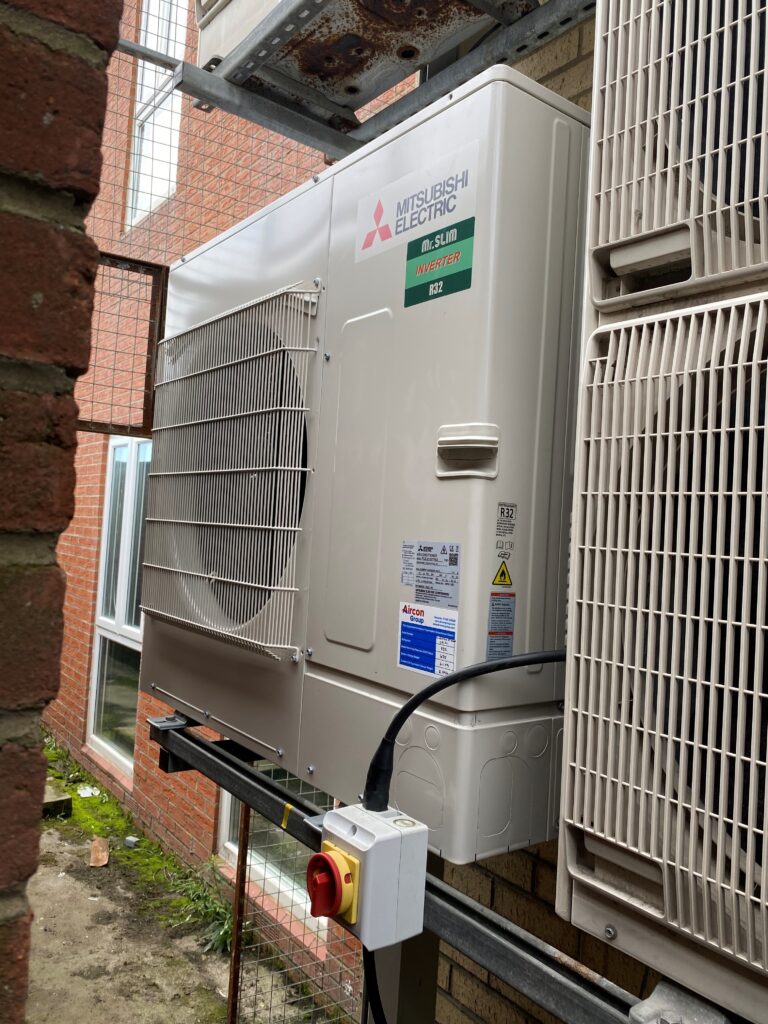
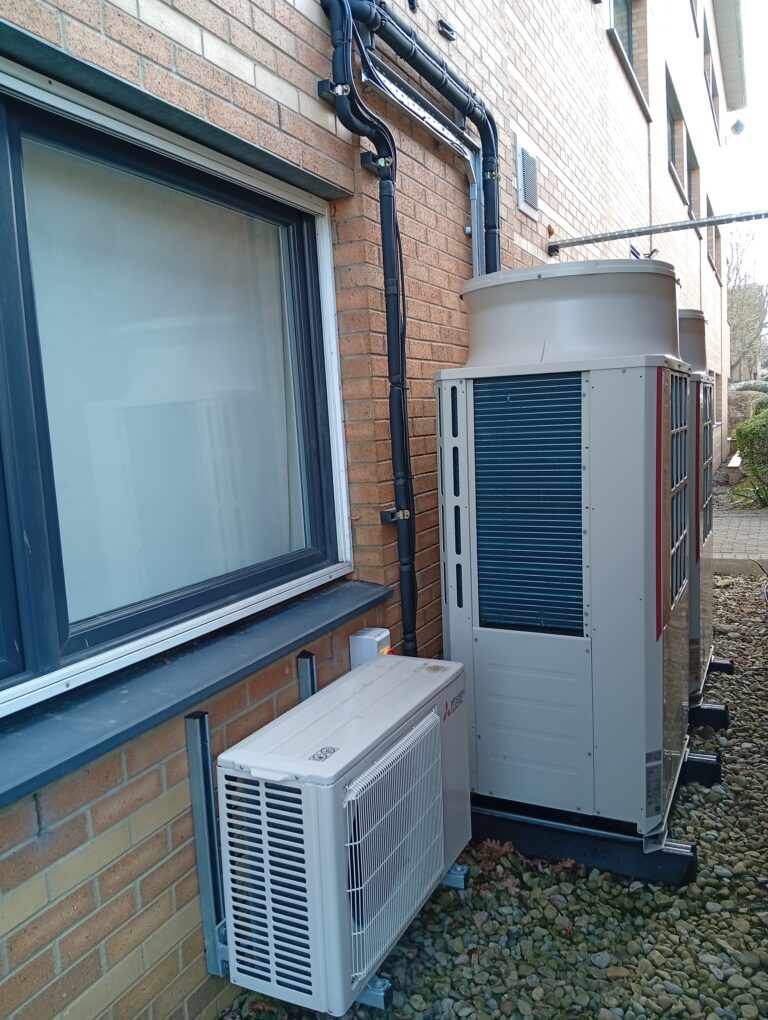
Leaves, vegetation and debris around outdoor condensers restrict airflow and reduce cooling performance.
Maintaining clear space around external units helps maximise heat transfer.
Watch for Changes
Be alert for:
- Unusual noises
- Water leaks
- Bad smells
- Reduced cooling
- Poor airflow
- Ice on coils
- Excessive vibration
- Thermostat problems
- Increased energy bills
Early intervention is almost always less expensive than waiting for complete system failure.
Avoid Constant Thermostat Adjustments
Frequently changing temperature settings forces the system to cycle unnecessarily.
Maintaining a consistent temperature supports better operating efficiency and improves occupant comfort.
Professional servicing keeps the system healthy, while simple routine checks help it stay that way between engineer visits.
Choosing a Qualified Air Conditioning Engineer
Not all maintenance is created equal.
When selecting a contractor, look for engineers with the appropriate qualifications, experience and certifications.
A reputable provider should be able to:
- Carry out comprehensive HVAC maintenance
- Perform refrigerant leak detection – as per F-gas regulations
- Handle refrigerant recovery safely
- Work in accordance with F-Gas Regulations (Company and engineer should be F-gas certified)
- Inspect electrical components
- Optimise system controls
- Advise on maintenance schedules
- Support warranty compliance
- Provide professional insurance
- Provide service backup even when they are on holiday
- Provide certification such as Construction line and ISO
For systems containing fluorinated greenhouse gases, work involving refrigerant handling should always be completed by a qualified F-Gas engineer.
Choosing experienced professionals helps ensure both safety and long-term system reliability.
Frequently Asked Questions
How often should an air conditioner be maintained?
Commercial systems typically require servicing every three to six months depending on operating hours and environmental conditions.
Does servicing improve energy efficiency?
Yes.
Cleaning coils, replacing filters, checking refrigerant levels and inspecting electrical components all contribute to improved energy efficiency, lower energy consumption and reduced running costs.
Will servicing help my warranty?
In many cases, yes.
Manufacturers frequently specify routine maintenance as part of their warranty conditions.
Keeping accurate maintenance records helps demonstrate compliance with manufacturer servicing requirements.
No maintenance – no warranty!
Can I maintain my own air conditioning unit?
Not recommended and will not cover warranty claims.
Could be breaking heath and safety and F-gas regulations
Final Thoughts
Regular air conditioning maintenance isn’t simply another expense—it’s an investment in reliability, efficiency and long-term performance.
Whether you own a single air conditioner or manage multiple commercial HVAC installations, routine maintenance helps maintain system efficiency, extend equipment life and reduce the likelihood of unexpected breakdowns.
By following an appropriate air conditioning maintenance schedule, arranging professional inspections and responding quickly to early warning signs, you can improve cooling/heating performance, lower energy bills and create a healthier indoor environment throughout the year.
From single split systems to large commercial installations, preventative maintenance remains the most effective way to protect both your equipment and your investment.
If your business also relies on temperature-controlled products, our Refrigerated Trailer Hire service provides dependable cold storage solutions to support events, logistics and temporary refrigeration requirements alongside your wider cooling infrastructure.