Ducted vs Split Air Conditioning Which Is Better in the UK
Choosing between ducted and split air conditioning depends on your building’s layout, budget, renovation plans, and long-term comfort goals.
- Ducted air conditioning delivers discreet, whole-building cooling and heating through concealed ductwork and offers advanced zoned temperature control.
- Split air conditioning provides flexible, room-by-room cooling with lower upfront costs and faster installation.
- For new builds, large properties, and open-plan layouts, ducted systems often deliver the best overall experience.
- For existing properties, split system air conditioning is usually more practical and cost-effective. They are easier to retro fit. But ducted systems can still be fitted with clever design or during building renovations.
- Energy efficiency depends less on the system type and more on factors such as correct sizing, inverter technology, SEER and SCOP ratings, and professional installation.
The best air conditioning for UK businesses isn’t about choosing the most expensive option—it’s about selecting a system that aligns with your property’s structure, use, and your future plans.
Ducted vs Split Air Conditioning: Understanding the Key Differences
As British summers become warmer and more unpredictable, demand for reliable climate control continues to rise. What was once viewed as a luxury is increasingly becoming an essential part of modern business design. It also has the advantage of being an air source heat pump for heating as well.
For many homeowners, however, the challenge isn’t deciding whether to install air conditioning—it’s choosing between two very different approaches: ducted air conditioning and split air conditioning.
At first glance, both systems perform the same job. They cool your premises in summer, provide efficient heating during colder months, and improve overall thermal comfort. Dig a little deeper, though, and the differences become much more significant.
Your choice can influence:
- Installation cost
- Annual running costs
- Energy efficiency
- Indoor air quality
- Property aesthetics
- Maintenance requirements
- Long-term property value
If you’re exploring professional air conditioning installation services, knowing the strengths and limitations of each system will help you make a more informed decision.
The right system should fit your property—not force your property to fit the system.
What Is Ducted Air Conditioning?
Ducted air conditioning uses a central indoor unit connected to a network of concealed ductwork installed within ceilings, loft spaces, or under floors.
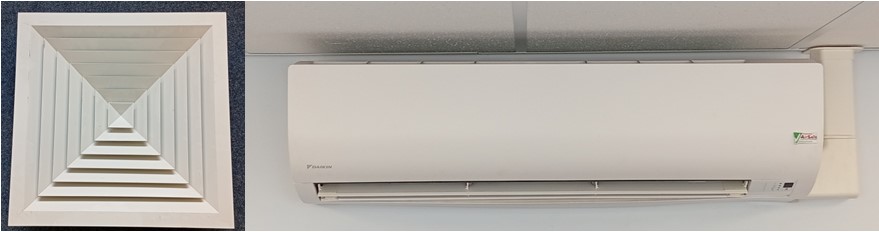
Conditioned air travels through insulated ducts and is delivered into individual rooms through discreet ceiling vents or grilles.
Most systems consist of:
- A central indoor unit
- An outdoor unit
- Insulated ductwork
- Return air grilles
- Smart thermostats or zoning controls
The major advantage is aesthetics. Aside from subtle ceiling vents, the system remains largely hidden.
This creates a seamless finish that complements:
- Open-plan spaces
- High-end renovations
- High end businesses
- Minimalist interiors
- Large buildings
- Office blocks
Advanced systems also enable HVAC zoning, allowing homeowners to adjust temperatures independently across different areas.
Rather than cooling an entire property at once, you can direct airflow only where needed, reducing electricity consumption and improving energy efficiency.
Benefits of Ducted Air Conditioning
- Discreet, concealed air distribution
- Consistent whole-building cooling and heating
- Excellent airflow distribution
- Reduced indoor noise levels
- Smart zoning capabilities
- Potential improvement towards Net Zero when replacing inefficient heating systems
- Increased appeal for future buyers
Modern ducted systems often utilise air source heat pump technology, delivering low-carbon heating and cooling from a single installation.
What Is Split Air Conditioning?
Split air conditioning systems consist of two primary components:
- An indoor unit mounted on a wall, floor, or ceiling
- An external outdoor unit
Unlike ducted systems, split units don’t require extensive ductwork.
Instead, refrigerant pipework connects the indoor and outdoor components directly, making installation significantly simpler.
This flexibility makes split system air conditioning especially popular for:
- Dentists
- Small offices
- Doctors
- Retail
- Server rooms
- Classrooms
- Petrol Forecourt shops
For businesses who need to cool several spaces independently, a multi-split air conditioning system connects multiple indoor units to a single outdoor unit.
This creates effective room-by-room cooling while reducing the number of external condensers required.
Benefits of Split Air Conditioning
- Lower upfront costs
- Faster installation times
- Minimal disruption during retrofitting
- Independent room control
- Excellent energy-saving performance
- Easy expansion over time
Today’s inverter air conditioning systems continuously adjust output to maintain stable temperatures while reducing energy consumption.
Many models also include:
- HEPA filters
- Humidity control
- Wi-Fi air conditioning control
- App-controlled air conditioning
- Voice-controlled air conditioning
- Advanced air filtration
Combined, these features can significantly improve indoor air quality throughout the building..
If fresh air circulation is equally important, integrating a dedicated ventilation system can help manage humidity, allergens, and stale indoor air more effectively.
Ducted vs Split Air Conditioning: Which System Works Best in UK businesses?
The answer depends heavily on your property type.
A system that works perfectly in a newly built office park may be completely impractical in a Converted Victorian terrace office.
Before comparing installation costs and running costs, ask yourself a few important questions:
- How much ceiling space is available?
- Are you building, renovating, or retrofitting?
- Do you want visible wall units or concealed air conditioning?
- How many rooms need cooling and heating?
- Is whole-building heating/cooling necessary?
- Will you need independent temperature control in different zones?
- What’s your realistic budget?
In the UK, business buildings vary enormously—from listed buildings and converted houses to contemporary new build developments.
This means there is no universal solution.
The ideal system depends on striking the right balance between:
- Property size
- Business requirements
- Aesthetic preferences
- Energy efficiency goals
- Total cost of ownership
Installation Costs: Which System Is More Affordable?
For most businesses, budget is one of the biggest deciding factors.
While the initial purchase price matters, it’s equally important to consider the lifetime ownership costs, including maintenance, electricity consumption, repairs, and future upgrades.
Split Air Conditioning Installation Costs
Split systems are typically the more affordable option because they require:
- Minimal structural alterations
- Limited pipework
- No ductwork installation
- Shorter installation times
A single-room split system is often ideal for:
- Restaurants
- Out buildings
- Hairdressers
- Shops
- Small offices
- Buildings with limited power supply
Multi-split air conditioning systems increase upfront costs but remain considerably less expensive than installing a whole-home ducted solution.
The total investment usually depends on:
- Number of indoor units
- Cooling capacity (kW)
- Property layout
- Outdoor unit location
- Electrical upgrades required
Ducted Air Conditioning Costs UK
Ducted systems involve more extensive planning and labour.
Installation generally includes:
- Load calculations
- Ductwork design
- Ceiling modifications
- Vent placement
- Zoning controls
- Additional insulation
As a result, upfront costs are significantly higher.
However, for larger properties requiring whole-building cooling, the price difference can narrow when compared with installing multiple individual split systems.
Ducted systems often deliver greater value in:
- Large offices
- Gyms
- Medical Centres
- Large retail units
The cheapest system to install isn’t always the cheapest system to own.
When comparing quotes, focus on the total cost of ownership, not simply the installation price.
Running Costs and Energy Efficiency
One of the most common questions homeowners ask is:
Are split systems cheaper to run than ducted air conditioning?
The answer depends on how you use the system.
Modern air conditioning systems are far more efficient than many people realise, particularly those using inverter technology and air source heat pump technology.
Key efficiency indicators include:
- Seasonal Energy Efficiency Ratio (SEER)
- SCOP rating
- A+++ energy rating
- Smart zoning capabilities
The higher these ratings, the lower your ongoing electricity consumption.
How Split Systems Reduce Running Costs
Split systems excel at room-by-room cooling.
If you only need to cool a bedroom at night or a home office during working hours, you avoid wasting energy on unused spaces.
This targeted approach can significantly reduce:
- Annual running costs
- Cost per hour to run air conditioning
- Carbon footprint
Many units also include:
- Motion sensors
- Sleep modes
- App-controlled scheduling
- Remote temperature control
These features make split systems particularly attractive for smaller buildings.
How Ducted Systems Improve Efficiency
At first glance, cooling an entire business may appear less efficient.
However, modern ducted systems overcome this challenge through demand-based zoning.
With zoned temperature control, facilities can independently manage different areas of the property.
For example:
- Server room can operate day and night
- Work spaces can run during the day
- Rarely used offices/boardrooms can remain switched off, until required
Combined with smart thermostats and Business Management System (BMS), ducted systems can achieve impressive efficiency levels.
Properly designed ductwork is essential.
Poor airflow distribution, inadequate insulation, or incorrect sizing can increase running costs dramatically.
That’s why professional load calculations are critical before installation.
Maintenance Requirements and Servicing Costs
Both systems require regular servicing to maintain performance and protect manufacturer warranties.
Neglecting air conditioning maintenance can lead to:
- Reduced efficiency
- Higher electricity bills
- Poor indoor air quality
- Shorter equipment lifespan
Typical maintenance includes:
- Cleaning filters
- Inspecting refrigerant levels
- Checking electrical components
- Assessing airflow performance
- Cleaning coils and drainage systems
Split System Maintenance
Split systems are relatively simple to maintain because each indoor unit is easily accessible.
However, multiple indoor units can increase servicing requirements over time.
Ducted System Maintenance
Ducted systems have fewer visible components but may require periodic inspection of:
- Ductwork integrity
- Zone controls
- Return air grilles
- Ceiling vents
Access panels should always be included during installation to simplify future servicing.
Regardless of the system type, always work with an F-Gas certified installer to ensure compliance with UK regulations.
Businesses that specialise in temperature-controlled environments often apply the same precision used in advanced refrigeration services to optimise cooling performance, efficiency, and equipment longevity.
Aesthetics and Space Requirements
Visual impact is often overlooked until installation day.
At that point, staff quickly realise that aesthetics matter just as much as performance.
Ducted Air Conditioning: Hidden Comfort
Ducted systems are designed for concealed air conditioning.
Only subtle ceiling grilles remain visible.
This approach offers:
- Cleaner interior design
- Greater flexibility with furniture placement
- Reduced visual clutter
- Improved property appeal
The trade-off is space.
Ducted systems require sufficient:
- Ceiling voids
- Loft space
- Underfloor access
Retrofitting air conditioning into older buildings can therefore become more complex.
Split Air Conditioning: Practical Flexibility
Split systems require visible wall units, floor consoles, or ceiling cassettes.
While modern designs are increasingly discreet, they remain a visible feature within the room.
For many business owners, this compromise is outweighed by the benefits:
- Lower installation costs
- Faster installation
- Greater flexibility
- Easier upgrades
If ceiling space is limited, split systems are often the more practical solution.
Which System Is Better for Different Property Types?
No two UK businesses are alike.
Choosing the best air conditioning system means matching the technology to the building.
Here’s a quick overview.
| Business Type | Recommended Option |
| Small office | Split air conditioning |
| Medium Offices | Split or multi-split |
| Hairdressers | Split air conditioning |
| Portakabins/containers | Split air conditioning |
| Vets | Split air conditioning |
| New build office | Ducted air conditioning |
| Large offices/retail | Ducted air conditioning |
| Open-plan offices | Ducted air conditioning |
For many businesses, the decision comes down to one simple question:
Do you want discreet whole-home climate control, or flexible room-by-room cooling?
Key UK Regulations to Consider
Air conditioning installation should comply with:
- Part L Building Regulations
- F-Gas regulations
- Electrical safety standards
- Manufacturer installation guidance
Working with an experienced, F-Gas certified installer ensures your system is designed, installed, and commissioned correctly.
Outdoor Condenser Noise Regulations UK
Modern outdoor units are significantly quieter than older models, but noise remains an important consideration.
Factors affecting sound levels include:
- Outdoor unit size
- Installation location
- Anti-vibration mounting
- Property layout
Positioning the outdoor unit away from windows and neighbouring boundaries can help minimise disruption.
Indoor Air Quality and Health Benefits
Air conditioning is often associated solely with cooling, but modern systems offer far more.
Advanced filtration technology can improve indoor air quality by reducing:
- Dust
- Pollen
- Pet dander
- Airborne particles
- Excess humidity
Many systems now include:
- HEPA filters
- Humidity control
- Air purification modes
- Smart monitoring features
This can be particularly beneficial for people with allergies or respiratory sensitivities.
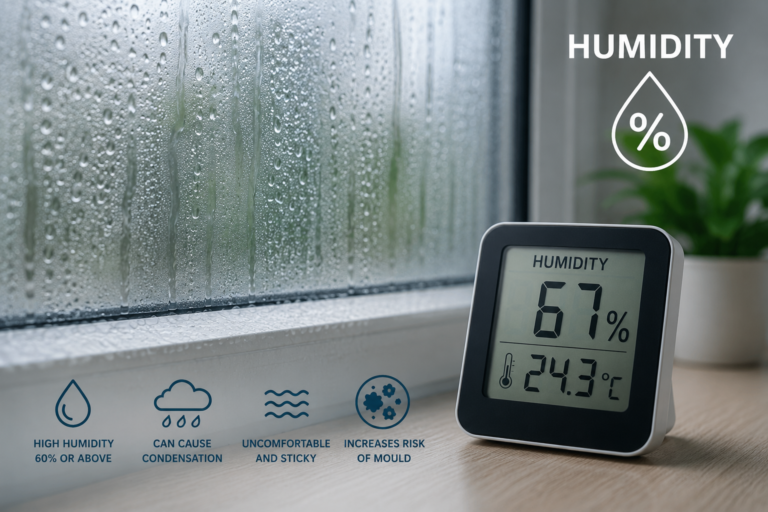
Maintaining comfortable humidity levels also helps prevent condensation and mould growth—an increasingly important consideration in UK properties.
For commercial settings, warehouses, and specialist environments requiring strict temperature management, integrated climate strategies often combine ventilation, cooling, and even temporary solutions such as refrigerated trailer hire.
Smart Technology and Future-Proofing Your Investment
Today’s air conditioning systems are designed to integrate seamlessly into connected buildings..
Features such as smart zoning and app-based controls make it easier than ever to optimise comfort while reducing energy consumption.
Look for systems that offer:
- Wi-Fi air conditioning control
- Smart thermostats
- Voice-controlled air conditioning
- Remote temperature control
- Energy usage tracking
These technologies help reduce electricity consumption by ensuring cooling and heating operate only when required.
As the UK moves towards net zero homes and renewable heating solutions, energy-saving air conditioning systems powered by air source heat pump technology are likely to become increasingly common.
Many business owners are also exploring:
- Solar-powered air conditioning
- Smart home integration
- Low-carbon heating and cooling
- Carbon footprint reduction strategies
Future-proofing your installation today could deliver long-term savings tomorrow.
Does Ducted Air Conditioning Increase a Buildings Value?
While no installation can guarantee a specific return on investment, high-quality climate control systems are becoming increasingly desirable.
Potential buyers often view professionally installed air conditioning as a premium feature because it offers:
- Enhanced comfort
- Improved energy efficiency
- Better indoor air quality
- Reduced reliance on traditional heating systems
- Increased convenience
Ducted systems, in particular, may appeal to buyers seeking a seamless, luxury finish.
However, split systems can also add value when thoughtfully installed and correctly sized.
The key is choosing a system that complements the property rather than overwhelming it.
Frequently Asked Questions
Is ducted air conditioning worth it in the UK?
For larger properties, open-plan layouts, and new build homes, ducted systems can provide exceptional comfort, aesthetics, and zoned temperature control.
For smaller properties or retrofit projects, split systems often represent better value.
Can you install ducted air conditioning in an existing building?
Yes, but sufficient ceiling space or loft access is essential.
Retrofitting ductwork into older properties can increase installation complexity and cost.
Is air conditioning energy efficient in the UK?
Yes ! Modern inverter air conditioning systems with high SEER and SCOP ratings can provide highly efficient cooling and heating throughout the year.
What size air conditioner do I need?
The correct cooling capacity depends on several factors, including:
- Room size
- Ceiling height
- Insulation levels
- Window orientation
- Occupancy levels
A professional load calculation is essential to ensure optimal performance and efficiency.
Final Verdict: Which Option Should You Choose?
Choosing between ducted and split air conditioning isn’t about finding a universally better system—it’s about finding the right fit for your property.
Choose ducted air conditioning if you:
- Want concealed air conditioning
- Need whole-business heating/cooling
- Value premium aesthetics
- Are building or renovating
- Have sufficient ceiling space
Choose split air conditioning if you:
- Need room-by-room cooling
- Have a limited budget
- Are retrofitting an existing building
- Want faster installation
- Prefer a scalable solution
For many UK business owners, split systems offer the most practical balance of cost, flexibility, and efficiency.
For others—particularly those creating a modern environment —the seamless experience of a ducted system may justify the higher upfront investment.
Ultimately, the best air conditioning for UK businesses depends on your property’s design, your lifestyle, and your long-term priorities.
Whether you’re cooling a single office, upgrading an existing office, or planning a complete whole-office climate control system, expert guidance can make all the difference.
Explore the latest solutions and learn more about bespoke cooling and heating options at Air Con Group.