How Much Does Commercial AC Replacement Cost?
Replacing commercial air conditioning in the UK can represent a significant capital expense, but there is no useful one-size-fits-all price. Commercial AC replacement costs can range from a couple of thousand pounds for a relatively straightforward small-premises installation to tens of thousands of pounds for larger, multi-zone or technically complex systems. The final price depends on cooling capacity, the number and type of indoor and outdoor units, building layout, access, pipework, electrics, controls and how much of the existing installation can be retained.
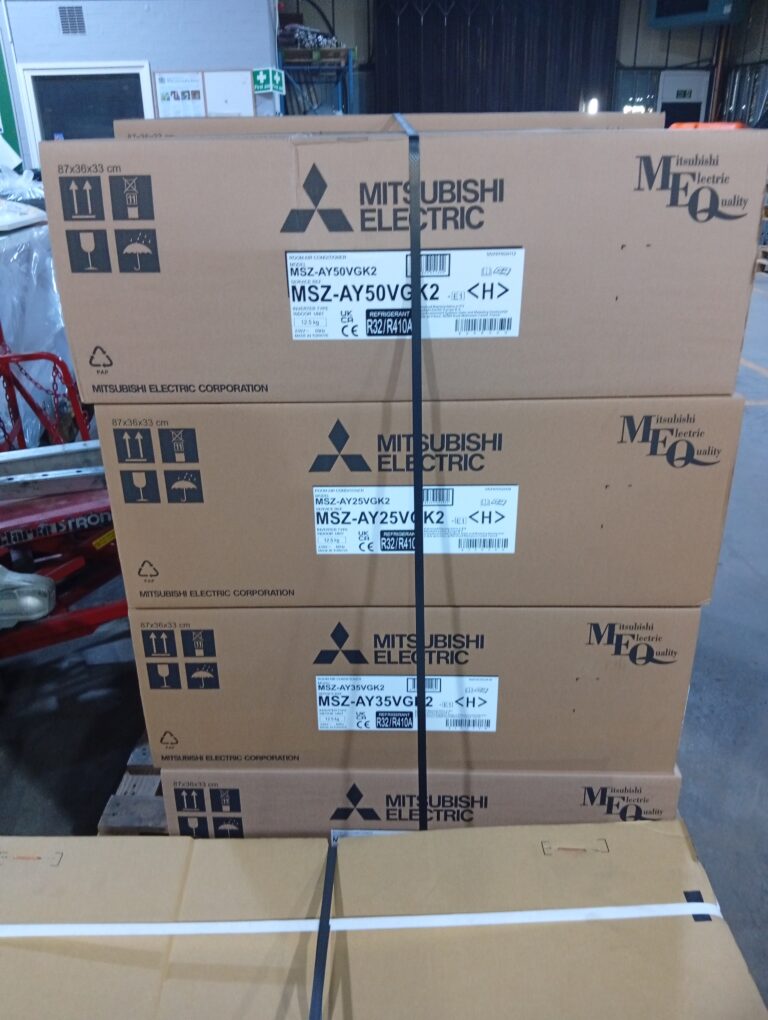
But also think about different manufacturers, like cars some are regarded as being better than others. How long is the warranty of a new system? Aircon Group has an excellent relationship with manufacturers and therefore can offer longer warranties than other suppliers. Aircon Group is Mitsubishi Diamond Partners, the highest you can achieve.
Best advice, get advice and quotes from an established specialist AC company. It should have a commercial address and a landline. Will the company be around in 2 years when there is a problem. Are they only install? No service or maintenance?
Commercial AC replacement costs at a glance
- Smaller commercial premises: replacement projects may start at approximately £2,000–£8,000.
- Typical commercial projects: a broad indicative range is around £5,000–£20,000.
- Large or complex installations: costs can rise to £20,000–£50,000+, particularly where extensive equipment, specialist access or major infrastructure work is required.
- The AC equipment is only part of the bill: labour, refrigerant pipework, refrigerant, electrical works, drainage, controls, access equipment and commissioning can all affect the installed cost.
- Repairing isn’t always cheaper in the long term: an ageing, inefficient system with frequent breakdowns can make replacement the more economical choice once energy consumption, repairs and downtime are considered. Aircon Group will advise you if it is time to replace a faulty unit.
- Efficiency matters: a new commercial air conditioning system may carry a substantial upfront cost, but lower running costs and improved reliability can change its whole-life cost considerably. But also look more aesthetically pleasing. A well decorated building with old faded plastics doesn’t look good.
- An accurate price requires a site-specific assessment: floor area alone cannot tell you what a commercial AC replacement will cost. Cooling load, occupancy, operating hours, heat gains and the condition of the existing installation all matter. Aircon Group provides site surveys with our dedicated design engineers for free, and provides a no obligation quote.
In short: the question isn’t simply, “What does a commercial AC unit cost?” It is, “What will it cost to remove or adapt the existing system, correctly size and install its replacement, and leave the building with an efficient, reliable and fully commissioned cooling solution?”
What Is the Average Commercial Air Conditioning Replacement Cost in the UK?
As a broad guide, commercial air conditioning replacement cost in the UK commonly falls somewhere between £5,000 and £20,000, while large or complicated projects can extend well beyond that range.
That is deliberately a wide bracket.
A small office replacing a limited number of split-system units is a very different proposition from a multi-storey commercial building requiring multiple indoor units, substantial refrigerant pipework, new controls and high-capacity outdoor equipment. At the larger end, commercial and industrial air conditioning replacement projects can potentially reach £20,000–£50,000 or more.
This is why comparing commercial AC quotes purely by headline price can be misleading. Two quotes that initially appear to cover the same job may include very different equipment specifications, labour requirements, controls, electrical work and commissioning.
A useful quotation should make clear what you’re actually paying for.
What makes up the replacement price?
A commercial air conditioning installation cost can include:
- New AC equipment – indoor units, outdoor units, controls and associated components.
- Removal of the old system – including safe decommissioning and removal of equipment where required. Safe disposal of refrigerant gas.
- Refrigerant pipework – whether existing pipework is suitable for reuse or new pipe runs are necessary.
- Condensate drainage – including alterations or new drainage routes.
- Electrical works – circuits, isolators, power supplies and any upgrades required for the new equipment.
- Labour – installation time varies substantially with system size and complexity.
- Access requirements – roof access, lifting equipment or difficult installation locations can increase costs.
- Controls and zoning – particularly where different areas need independent temperature control.
- Testing and commissioning – ensuring the completed system operates correctly and efficiently.
- Making good – where ceilings, walls or other building finishes have been disturbed during replacement.
These variables explain why the cost to replace commercial air conditioning cannot reliably be calculated from the purchase price of a commercial AC unit alone.
For businesses planning wider mechanical improvements, cooling may also need to be considered alongside the property’s ventilation requirements. Treating the building as a complete environment rather than a collection of isolated systems can help avoid specifications that solve one problem while creating another.
Why Can One Commercial AC Replacement Cost £6,000 and Another £40,000?
Because “commercial air conditioning” describes an enormous range of installations.
Picture two businesses.
The first occupies a modest office with several rooms. It has an ageing split air conditioning system, accessible outdoor equipment and relatively straightforward pipe routes. The electrical supply is suitable and very little building work is required.
The second operates from a large commercial property with multiple floors, high occupancy, server equipment, meeting rooms and different temperature requirements throughout the day. Its existing HVAC system is approaching the end of its service life. Replacing it requires multiple indoor units, extensive pipework, zoning, controls, difficult roof access and potentially phased installation to keep the business operational.
Both businesses are “replacing the air conditioning”.
Their projects have almost nothing else in common.
That difference is fundamental to understanding commercial AC cost in the UK.
The biggest factors affecting replacement cost
| Cost factor | Why it matters |
| System size | More cooling capacity generally means larger or additional equipment. |
| System type | Split, multi-split, ducted and VRF/VRV systems have very different equipment and installation requirements. |
| Building size | Larger premises commonly require more zones, units and pipework. |
| Cooling load | Floor area isn’t the only consideration; occupancy, glazing, equipment and heat gains influence capacity. |
| Existing installation | Reusable infrastructure may reduce work, while obsolete or unsuitable components can increase it. |
| Site access | Restricted plant areas, roof installations and difficult access can add labour or lifting requirements. |
| Electrical works | New circuits, isolators or upgrades can increase the total project cost. |
| Controls and zoning | More sophisticated temperature management can increase initial cost while improving usability and efficiency. |
| Operating requirements | Businesses that cannot simply shut down may need phased or out-of-hours installation. |
| Specification and efficiency | Higher-efficiency equipment can cost more initially but may reduce energy consumption over its service life. |
In other words, price follows complexity.
A useful commercial AC quote therefore needs to look beyond square metres and the number of rooms. Correct system selection begins with understanding how the property is actually used.
System Type Has a Major Impact on Commercial AC Replacement Cost
One of the first decisions is what type of replacement air conditioning system the building needs.
There is no universally “best” commercial AC system. A solution that makes sense for a small office could be impractical for a large, multi-zone building.
Single split air conditioning
A single split system typically connects one indoor unit to one outdoor unit.
For smaller commercial premises, individual offices or clearly defined areas, split air conditioning can offer a relatively simple route to replacement. Fewer components and straightforward pipe runs can help keep the initial installation price under control.
However, the economics can change as the number of rooms increases. Installing numerous individual split systems means additional outdoor equipment, electrical connections and pipework.
So while a single split can be cost-effective on a small scale, multiplying it across a large building doesn’t automatically produce the lowest total project cost.
Multi-split air conditioning
A multi-split system allows several indoor units to operate from a smaller number of outdoor units.
This can be attractive where outdoor space is limited or where several rooms require independent cooling. The equipment configuration may be neater, but installation complexity, refrigerant pipe runs and controls still need to be factored into the commercial AC installation cost.
The key is matching the design to the building rather than choosing equipment purely because its initial purchase price looks attractive.
VRF and VRV systems
Larger commercial properties may use VRF (Variable Refrigerant Flow) or VRV air conditioning.
These systems can serve multiple zones and offer sophisticated control over different areas of a building. That makes them particularly relevant to larger offices and other commercial environments where occupancy and cooling demand vary from one space to another.
The trade-off is complexity.
A VRF system replacement may involve:
- multiple indoor units;
- substantial refrigerant pipework;
- larger outdoor equipment;
- more advanced controls;
- detailed system design;
- complex commissioning;
- access to plant or roof areas.
As a result, a VRF replacement cost in the UK can be considerably higher than replacing a small split system.
That doesn’t necessarily make it more expensive over the life of the building. Capital cost is only one side of the equation.
Don’t Compare Commercial AC Systems on Purchase Price Alone
This is one of the easiest mistakes to make when budgeting for an AC system replacement.
Suppose System A has the lowest upfront cost.
System B costs more initially but consumes less electricity, offers better zoning, suits the building’s cooling load more closely and reduces the likelihood of repeated breakdowns associated with the existing equipment.
Which one is cheaper?
The answer depends on the period over which you measure it.
Upfront cost vs whole-life cost
For a commercial air conditioning system, the financial calculation can include:
Whole-life cost = initial equipment + installation + energy + maintenance + repairs + downtime – residual savings
The precise calculation will differ for every property, but the principle matters.
Commercial air conditioning can operate for thousands of hours. Small differences in efficiency can therefore accumulate over years of operation. An inexpensive system that is poorly sized or inefficient may eventually cost considerably more through electricity consumption than its initial saving.
The same applies to maintenance.
Commercial properties with other temperature-critical requirements may also have separate commercial refrigeration systems, making energy efficiency and lifecycle planning especially important when several cooling systems contribute to the site’s electricity demand.
So when comparing an air conditioning replacement cost in the UK, ask for more than the bottom-line installation figure.
Ask:
- What cooling capacity is being specified?
- Why has that capacity been selected?
- How efficient is the proposed equipment?
- What are its likely operating costs?
- What maintenance will it require?
- What warranty is included?
- How controllable is the system?
- Can individual zones be managed independently?
- What is the expected service life?
- What parts of the existing installation are being reused?
A cheaper quote isn’t necessarily poor value.
An expensive quote isn’t necessarily better.
What matters is what the price buys you over the life of the system.
How Building Size and Cooling Load Change the Price
It would be convenient if commercial air conditioning replacement could be priced using a simple cost-per-square-metre formula.
Unfortunately, buildings don’t behave that neatly.
Two offices of exactly the same floor area can require very different cooling capacities.
Why?
Because cooling demand is affected by more than size.
Consider:
- the number of occupants;
- computers, servers and other heat-generating equipment;
- glazing and solar gain;
- building orientation;
- insulation;
- ceiling height;
- operating hours;
- lighting;
- fresh-air requirements;
- room usage;
- existing ventilation;
- and the temperature conditions the business needs to maintain.
An open-plan office occupied by dozens of people with computers running throughout the working day can have very different heat gains from a similarly sized commercial space with low occupancy.
This is why right-sizing matters.
Bigger isn’t automatically better
An oversized commercial AC unit can look reassuring on paper: more capacity, therefore more cooling.
But oversizing isn’t the objective.
The objective is the correct cooling capacity for the actual load.
An appropriately specified system should be designed around the property’s requirements rather than simply replacing old equipment like-for-like or choosing a larger system “to be safe”.
Before committing to a new commercial air conditioning system, a proper assessment of the building, its usage and its existing equipment is therefore far more valuable than a generic online cost-per-room figure.
And that brings us to another major question: how much of the existing AC installation can actually be reused?
Can Existing Pipework, Electrics and Ductwork Be Reused?
Potentially — and this can make a meaningful difference to the final commercial air conditioning replacement cost.
When an existing system is removed, the new installation doesn’t necessarily require every component to be stripped out and started again. Some infrastructure may be suitable for reuse, depending on its condition, specification and compatibility with the replacement equipment.
However, “it’s already there” doesn’t automatically mean “it can stay”.
An installer may need to assess:
- existing refrigerant pipework;
- pipe sizes and routes;
- pipe insulation;
- condensate drainage;
- electrical supplies;
- circuits and isolators;
- communication cabling;
- existing ductwork;
- controls;
- mounting positions;
- outdoor unit locations;
- and access arrangements.
Reusing suitable infrastructure can reduce material costs, labour requirements and disruption.
Reusing existing pipework and electrically supply is known as topping and tailing.
Finding that it cannot be reused can have the opposite effect.
For example, replacing a commercial AC unit may initially sound straightforward. But if the existing refrigerant pipework is unsuitable, electrical capacity needs upgrading and the outdoor unit is positioned somewhere that requires specialist lifting equipment, the scope of the project quickly changes.
This is why a site assessment is so important when establishing a realistic replacement budget.
A replacement quote should be based on the system you’re installing and the building you’re installing it into — not simply the price of the new equipment.
What Are the Hidden Costs of Commercial AC Replacement?
“Hidden” is perhaps the wrong word.
Most of these costs aren’t hidden at all when a project has been properly surveyed and specified. They become surprises when the initial budget considers the equipment but overlooks what is required to install it.
1. Removing and decommissioning the old system
Before a new system goes in, the old one usually has to come out.
That can involve considerably more than disconnecting a few pipes.
Existing equipment may need to be safely isolated, refrigerant handled appropriately and indoor or outdoor units physically removed from awkward locations.
Large outdoor units can present particular challenges if they are mounted on roofs, plant areas or other restricted-access locations.
2. Access and lifting equipment
Site access can dramatically alter labour costs.
An outdoor unit installed at ground level with clear access is one thing. Equipment positioned on a commercial roof is another.
Depending on the building, an AC replacement may require:
- scaffolding;
- powered access equipment;
- roof access arrangements;
- lifting equipment;
- crane hire;
- additional personnel;
- temporary access restrictions.
These costs become increasingly relevant as equipment size and installation complexity increase.
3. Electrical upgrades
A replacement system may have different electrical requirements from the equipment it replaces.
That can mean new circuits, isolators, cabling or alterations to the existing power supply.
For a small project, the electrical works may be relatively minor. Across a large commercial building with multiple units, they can become a meaningful part of the total project cost.
4. New refrigerant pipework
If existing refrigerant pipework cannot be retained, new pipe runs will need to be installed.
The cost depends partly on distance and partly on difficulty.
A short, accessible pipe route is very different from one passing through ceiling voids, risers, multiple floors or restricted areas.
Pipework isn’t just a materials cost, either. Longer or more complicated routes require additional installation time and extra refrigerant gas.
5. Condensate drainage
Air conditioning produces condensate, and that water has to go somewhere.
A replacement may require existing drainage to be modified or entirely new condensate routes to be installed. Pumps may also be required where gravity drainage isn’t practical.
It’s a small detail compared with the price of major AC equipment — until the building makes that detail complicated.
6. Ductwork modifications
For a ducted air conditioning replacement, the condition and suitability of existing ductwork becomes particularly important.
If the ductwork is in good condition and compatible with the replacement design, retaining it may reduce project costs.
If it needs modification, repair or replacement, the budget can increase considerably.
7. Ceilings, walls and making good
Commercial AC systems don’t exist independently of the building.
Installers may need access above ceilings, through walls or into service areas. Where finishes need to be opened to provide that access, the scope should establish who is responsible for making good afterwards.
8. Out-of-hours or phased installation
Sometimes the biggest constraint isn’t technical.
It’s operational.
An office, retail premises, hotel, production area or other commercial environment may not be able to shut down while its air conditioning is replaced.
That can lead to phased installation, weekend work or out-of-hours working.
The approach can reduce disruption to business operations but potentially increase labour requirements and the overall installation price. Aircon Group can discuss options regarding dates and hours worked on this issue, it is something that over their 60 year history has been managed.
How Much Does It Cost to Replace Office Air Conditioning?
Office air conditioning is a useful example because the term covers everything from a few rooms to enormous multi-floor properties.
A small office with several straightforward split units could sit toward the lower end of commercial replacement budgets. A large office building requiring multi-zone VRF or VRV air conditioning could represent an investment of tens of thousands of pounds.
For that reason, there isn’t a dependable universal cost per room.
Nor is there a universal commercial HVAC cost per m² that can accurately price every project.
Those figures can be useful for very early budgeting, but they become unreliable when treated as quotations.
Consider two 500 m² offices.
Office A
- relatively low occupancy;
- modern glazing;
- moderate equipment loads;
- straightforward outdoor-unit access;
- short pipe runs;
- suitable electrical infrastructure;
- standard working hours.
Office B
- high occupancy;
- extensive glazing and solar gain;
- server equipment;
- numerous meeting rooms;
- long operating hours;
- difficult roof access;
- multiple independently controlled zones;
- replacement required without closing the office.
Their floor areas are identical.
Their commercial AC installation costs may be anything but.
That is why cooling-load calculations, building usage and installation conditions are more valuable than floor area alone when moving from an approximate budget to an accurate quote.
Should You Repair or Replace Commercial Air Conditioning?
Not every failing AC system needs replacing.
Sometimes a repair is the sensible option.
If the equipment is relatively young, otherwise reliable and the fault is isolated, replacing a component may restore years of useful operation without the capital cost of a complete HVAC system replacement.
But there comes a point when repeatedly repairing an ageing system stops being economical.
Signs replacement may deserve consideration
A commercial air conditioning replacement may become more attractive when:
- breakdowns are becoming frequent;
- repair costs are increasing;
- replacement parts are becoming difficult to obtain;
- the system no longer maintains the required temperature;
- energy consumption has increased;
- the equipment is noticeably inefficient;
- different areas of the building are difficult to control;
- the system is approaching the end of its expected service life;
- a major component such as a compressor requires costly repair;
- or the existing system no longer suits the way the building is used.
The important word here is may.
Age by itself doesn’t determine whether equipment should be replaced.
A well-maintained older system can sometimes remain serviceable, while badly maintained or heavily worked equipment may encounter problems earlier.
Compare the repair bill with the remaining service life
Imagine an ageing system requires a substantial repair.
The immediate comparison might look like this:
Repair: £X
Replacement: £XXXX
Repair wins.
But that comparison misses something important: what happens next?
If the repair buys several more reliable years, it may be excellent value.
If another major component fails six months later, followed by another call-out and another period without cooling, the calculation changes.
A better comparison considers:
Repair cost + likely future repairs + energy use + downtime + remaining service life
against:
Replacement cost + future maintenance + expected energy use + expected service life
That is closer to the real repair vs replacement cost decision.
How Long Does Commercial Air Conditioning Last?
There isn’t a single expiry date for a commercial AC system.
Its service life depends on the equipment, installation quality, operating environment, hours of use and how consistently it has been maintained.
A system operating heavily throughout the year in a demanding commercial environment experiences different stresses from equipment used intermittently in a small office.
Maintenance matters too.
Filters, coils, refrigerant circuits, drainage, fans, controls and other components all contribute to system performance. Neglect can increase energy consumption and put unnecessary strain on equipment.
As systems age, businesses should pay particular attention to the pattern of problems rather than simply the number on the calendar.
One breakdown isn’t necessarily a reason to replace a system.
Repeated breakdowns, deteriorating efficiency and increasingly expensive repairs tell a different story.
Planned replacement vs emergency replacement
There is also a practical advantage to recognising when equipment is nearing the end of its useful life.
Planned AC replacement gives you choices.
You have time to:
- assess the existing system;
- calculate the building’s current cooling requirements;
- compare replacement options;
- plan the budget;
- schedule installation around operations;
- consider energy efficiency and controls;
- and minimise disruption.
An emergency replacement starts with a different priority:
Get the cooling back.
That urgency can restrict scheduling, equipment choices and the amount of time available to evaluate alternative system designs.
For temperature-sensitive operations, loss of cooling can be particularly serious. Businesses that need temporary cold-storage capacity while permanent systems are being repaired, replaced or upgraded may also need to consider solutions such as refrigerated trailer hire as part of their continuity planning.
Where possible, renewal planning is preferable to waiting for complete system failure.
How Energy Efficiency Changes the Real Cost of Replacement
The installation invoice tells you what a replacement system costs today.
It doesn’t tell you what that system will cost to operate for the next several years.
For commercial buildings, that distinction matters.
Air conditioning may run for long periods, particularly during warmer months or in spaces with significant internal heat loads. Server rooms, heavily occupied offices, retail environments and buildings containing substantial electrical equipment may require cooling even when outdoor temperatures are relatively modest.
Consequently, electricity consumption can form a substantial part of the total cost of ownership.
Understanding SEER, SCOP, EER and COP
When comparing equipment, you may encounter efficiency measurements including:
- SEER – Seasonal Energy Efficiency Ratio;
- SCOP – Seasonal Coefficient of Performance;
- EER – Energy Efficiency Ratio;
- COP – Coefficient of Performance.
You don’t need to turn your AC replacement project into an engineering exam.
The practical point is that equipment cost and operating efficiency are not the same thing.
A lower-priced system with higher annual electricity consumption may ultimately prove more expensive than equipment carrying a higher initial cost but offering better efficiency.
That makes energy performance particularly important when comparing systems expected to operate for many hours each year.
What Does Right-Sizing Have to Do With Energy Costs?
Quite a lot.
Choosing a new commercial AC system isn’t about installing the highest cooling capacity the budget allows.
It is about matching capacity to demand.
A proper load calculation can consider factors such as:
- occupancy;
- floor area;
- glazing;
- solar heat gains;
- equipment;
- lighting;
- operating hours;
- ventilation;
- room orientation;
- and how individual spaces are used.
An oversized system isn’t automatically more effective, while an undersized one may struggle to maintain comfortable conditions during periods of high demand.
Correct system selection can contribute to comfort, efficiency, equipment performance and long-term operating costs.
Controls matter as well.
If a large commercial building has multiple areas with different occupancy patterns, zoning can prevent every space from being treated as though its cooling requirements were identical.
Depending on the installation, modern controls may provide:
- independent zone control;
- scheduling;
- temperature setpoints;
- occupancy-based operation;
- centralised control;
- remote monitoring;
- and integration with a building management system (BMS).
The upfront specification therefore has consequences long after the installers leave.
Commercial AC Replacement Is a CAPEX Decision — But OPEX Matters Too
For budgeting purposes, it can be useful to separate capital expenditure (CAPEX) from operating expenditure (OPEX).
The replacement project itself represents the capital side: equipment, materials, labour, associated works and commissioning.
Then the system begins costing money to operate.
Those ongoing costs can include:
- electricity;
- planned maintenance;
- servicing;
- replacement filters and consumable components;
- repairs;
- call-outs;
- and eventually further renewal expenditure.
This is why procurement based entirely on the lowest initial quotation can be short-sighted.
For example, suppose one proposal costs more but provides:
- better seasonal efficiency;
- more appropriate zoning;
- improved controls;
- easier maintenance access;
- strong manufacturer support;
- and a suitable warranty.
Those benefits may be difficult to see when two quotations are reduced to their bottom-line totals.
Over ten or more years of operation, however, seemingly small differences can become significant.
The cheapest system to buy and the cheapest system to own are not necessarily the same system.
Maintenance Should Be Included in the Replacement Calculation
A new commercial AC system still requires maintenance.
Replacement resets the age of the equipment; it doesn’t remove the need to look after it.
Planned maintenance can help identify developing problems, keep components clean and maintain system performance.
Depending on the equipment and installation, routine attention may involve areas such as:
- filters;
- condenser coils;
- evaporator coils;
- refrigerant levels;
- refrigerant leaks;
- condensate drainage;
- compressors;
- fan motors;
- electrical components;
- controls;
- sensors;
- and general system operation.
Maintenance requirements should therefore be considered before selecting equipment rather than after installation.
Ask what the proposed system will require over its service life.
How frequently should it be serviced?
How accessible are filters and components?
What does the manufacturer’s warranty require?
What happens if a critical component fails?
Are replacement parts readily available?
These questions don’t change the headline air conditioner replacement cost, but they can significantly affect lifecycle costs.
And there is another consideration that becomes increasingly important for UK businesses: compliance.
Commercial air conditioning isn’t simply a matter of buying equipment, installing it and switching it on. Refrigerants, inspections, commissioning and record keeping can introduce obligations that need to be understood as part of responsible system ownership.
UK Compliance: What Needs to Be Considered When Replacing Commercial AC?
Commercial air conditioning replacement isn’t only an equipment decision. The refrigerant contained within the system, the way the old equipment is decommissioned and the way the replacement is installed can bring regulatory responsibilities into the project.
This is another reason why comparing quotations purely on the price of the equipment can give an incomplete picture.
Two systems may appear similar on paper while differing considerably in refrigerant technology, efficiency, installation requirements and long-term suitability.
F-Gas and refrigerant considerations
Many commercial air conditioning systems use fluorinated refrigerants, which means F-Gas requirements can be relevant to their installation, maintenance and decommissioning.
Depending on the system and refrigerant involved, considerations can include:
- appropriate handling and recovery of refrigerant;
- work being undertaken by suitably qualified personnel;
- refrigerant leak prevention;
- leak checks where applicable;
- record keeping;
- correct commissioning;
- and ongoing refrigerant management.
This becomes particularly important when replacing an ageing AC system.
Simply assuming that an old refrigerant-based installation should be replicated exactly may not provide the most sensible long-term solution. Refrigerant availability, environmental impact and future regulatory changes should all be considered when specifying replacement equipment.
For a business investing thousands — or tens of thousands — of pounds into a new HVAC system, future-proofing matters.
What Is a TM44 Inspection?
Some commercial air conditioning installations may also fall within requirements relating to TM44 air conditioning inspections.
The relevance of TM44 depends on the combined rated output of the air conditioning systems within the building, with the 12 kW threshold being an important consideration.
A TM44 inspection is different from routine servicing.
Its purpose is to assess the efficiency of air conditioning systems and provide advice on opportunities to improve their performance.
For businesses operating larger systems, replacement can therefore be a useful opportunity to think beyond simply restoring cooling.
It can be an opportunity to reconsider:
- system efficiency;
- controls;
- zoning;
- operating schedules;
- equipment sizing;
- energy consumption;
- and how cooling demand has changed since the original system was installed.
Buildings evolve.
A commercial office originally designed for one occupancy level may now contain more employees, more computers, different room layouts and entirely different operating patterns.
Replacing the old system without reconsidering those changes can mean replacing yesterday’s solution rather than specifying today’s.
Why Commissioning Matters After an AC Replacement
Installation isn’t finished simply because the indoor units turn on and cold air comes out.
A replacement system should be properly tested and commissioned.
Commissioning helps establish that equipment has been installed correctly and is operating as intended. Depending on the system, this can involve checking operating parameters, controls, drainage, electrical components, refrigerant circuits and system performance.
This stage matters because even high-quality equipment can perform poorly if the installation isn’t right.
Think of the process as three connected decisions:
Correct equipment + correct installation + correct commissioning = a replacement system capable of performing as designed.
Cutting corners on any one of those areas can undermine the investment made in the other two.
Businesses should therefore establish what commissioning is included when comparing a commercial AC quote and what documentation will be provided when the project is complete.
How Should You Compare Commercial AC Replacement Quotes?
Receiving three quotations doesn’t necessarily mean you have three comparable prices.
One contractor may quote for a basic like-for-like replacement.
Another may identify that the existing cooling capacity no longer suits the building and propose a redesigned system.
A third may include electrical alterations, controls and associated works that the other quotations exclude.
Their totals could be dramatically different while all three appear under the heading “air conditioning replacement”.
The solution is to compare scope rather than price alone.
A good commercial AC quote should make the scope clear
When reviewing quotations, look for information covering:
- Equipment specification
What equipment is actually being supplied? - Cooling capacity
What capacity has been specified, and how was it determined? - Number of indoor and outdoor units
Are you comparing equivalent configurations? - System type
Is the proposal based on split, multi-split, ducted, VRF/VRV or another arrangement? - Removal of existing equipment
Is decommissioning and removal included? - Refrigerant pipework
Is existing pipework being retained, modified or replaced? - Condensate drainage
What drainage work is included? - Electrical works
Are circuits, isolators and other electrical requirements included? - Controls and zoning
What level of control will users actually have? - Access equipment
Are scaffolding, lifting equipment or other access costs included where required? - Testing and commissioning
What happens before the system is handed over? - Making good
Who is responsible for repairing finishes disturbed during installation? - Warranty
What warranty applies to the equipment and installation? - Maintenance requirements
What will be required to keep the system operating correctly? - Exclusions
Perhaps most importantly: what isn’t included?
An itemised quote makes it easier to understand why one proposal costs more than another.
Without that detail, comparing commercial AC replacement prices can become an exercise in comparing numbers that don’t represent the same job.
Is the Cheapest Commercial AC Quote the Best?
Sometimes.
There is nothing inherently wrong with choosing the least expensive quotation when it provides the right system, appropriate capacity, a complete scope and good long-term value.
The problem comes when lowest initial cost becomes the only criterion.
Imagine three proposals:
| Proposal | Initial cost | Efficiency | Scope | Longer-term outlook |
| A | Lowest | Standard | Basic replacement | Lower upfront expenditure |
| B | Mid-range | Higher | More comprehensive | Potential for lower running costs |
| C | Highest | High | Extensive redesign | Potentially suited to more complex requirements |
The cheapest proposal could genuinely be the right answer.
Or Proposal B could deliver better value because its additional capital cost is recovered through energy savings and improved operation.
Or the building could require the more extensive solution represented by Proposal C.
The point is not that expensive equipment is better.
It’s that commercial HVAC replacement cost should be evaluated against what the business actually receives.
How Do You Calculate the Payback on a More Efficient AC System?
If a new system reduces electricity consumption, the savings can help offset the additional capital cost of choosing higher-efficiency equipment.
A simple calculation is:
Payback period = additional upfront investment ÷ annual savings
For example, imagine that a more efficient specification costs an additional £4,000 but is estimated to reduce annual energy costs by £1,000.
The simple payback period would be:
£4,000 ÷ £1,000 = 4 years
After that point, the accumulated energy savings begin to exceed the additional initial investment, assuming usage and energy costs broadly follow the assumptions used in the calculation.
Of course, real buildings are more complicated.
Energy prices change. Operating hours change. Occupancy changes. Weather changes.
Maintenance and repair costs may also differ between systems.
For that reason, a more comprehensive assessment should consider:
- annual kWh consumption;
- electricity cost per kWh;
- expected operating hours;
- seasonal efficiency;
- maintenance costs;
- anticipated repair costs;
- expected service life;
- and the initial capital cost.
This produces a more useful picture of whole-life cost and potential return on investment.
A Worked Commercial AC Replacement Cost Example
Consider a fictional medium-sized commercial office replacing an ageing air conditioning installation.
The existing equipment has become unreliable. Different areas of the office experience inconsistent temperatures, breakdowns are becoming more frequent and management is concerned about rising electricity consumption.
A site assessment determines that the replacement project requires:
- multiple indoor units;
- new outdoor equipment;
- partial replacement of refrigerant pipework;
- alterations to condensate drainage;
- electrical work;
- improved zoning;
- new controls;
- removal of obsolete equipment;
- testing and commissioning.
Suppose the completed project is quoted at £18,000.
That £18,000 shouldn’t be viewed as simply the “price of the air conditioners”.
It represents a complete project.
Now imagine a cheaper quotation of £14,000 arrives.
At first glance, the saving is obvious: £4,000.
But further examination shows that the cheaper proposal assumes existing pipework can be reused, excludes certain electrical works and provides a more basic controls package. How long is the warranty for each quote??
The difference is no longer simply:
£14,000 vs £18,000.
It is:
What is included for £14,000 versus what is included for £18,000?
That is the comparison businesses should make.
How Long Does Commercial AC Replacement Take?
Project duration varies just as widely as project cost.
A straightforward air conditioning unit replacement in a small commercial property may be completed relatively quickly.
A large VRF system replacement serving numerous zones is a different undertaking.
Timescale can be influenced by:
- number of units;
- system type;
- building size;
- pipework requirements;
- electrical alterations;
- ductwork modifications;
- equipment access;
- working-hour restrictions;
- commissioning requirements;
- and whether the installation must be phased.
This makes early planning particularly useful for businesses that rely heavily on climate control.
Can AC be replaced without closing the business?
Often, disruption can be reduced through careful project planning.
Depending on the building and system design, work may potentially be divided into stages so that different areas are taken offline at different times.
Other projects may be scheduled around evenings, weekends or quieter operational periods. For instance, recently a small replacement install by the Aircon Group was carried out on a Friday, as most of the employees work from home on Fridays.
There may be additional labour costs associated with out-of-hours work, but businesses need to compare those costs with the financial impact of shutting down during normal operating hours.
For some organisations, minimising downtime is worth more than minimising installation cost.
That is why disruption should be discussed during the quotation stage rather than after work has begun.
How Can You Reduce Commercial AC Replacement Costs?
Reducing cost doesn’t have to mean reducing quality.
Some of the most effective savings come from planning.
Survey the system before it fails completely
Planned replacement gives you more time to assess equipment, compare specifications and schedule work sensibly.
Emergency replacement removes many of those advantages.
Establish what can genuinely be reused
Suitable existing pipework, ductwork, drainage or electrical infrastructure may reduce installation costs.
But it should only be retained where it is appropriate for the new equipment.
Get the system size right
Over-specifying equipment can increase capital expenditure unnecessarily.
Under-specifying it can create performance problems.
Proper system selection helps avoid both. We will help and advise about this.
Think about access early
If outdoor equipment needs to be moved onto or off a roof, access requirements should be identified during planning rather than discovered halfway through installation.
Compare whole-life cost
A modest increase in upfront cost can potentially be justified when it produces worthwhile reductions in electricity consumption or provides a better operational fit.
Replace strategically
If several ageing units are likely to require replacement within a similar period, it may be worth assessing whether a coordinated project offers practical advantages over a succession of reactive replacements.
The aim isn’t simply to achieve the lowest possible commercial AC installation cost.
It is to avoid paying for things twice.
Commercial AC Replacement Cost: Questions to Ask Before You Approve a Quote
Before committing capital expenditure to an air conditioning system replacement, ask the contractor:
- What is wrong with the existing system?
- Is complete replacement necessary, or could repair remain economical?
- What cooling load does the building require?
- Has the replacement been sized for current building usage?
- Which type of system is being recommended, and why?
- What equipment is included?
- What existing infrastructure can safely be retained?
- Are electrical works included?
- Is new refrigerant pipework included?
- Are drainage alterations included?
- Are access costs included?
- Is removal of the old equipment included?
- What controls and zoning are provided?
- What energy-efficiency performance should we expect?
- What maintenance will the system require?
- What warranty is provided?
- What commissioning is included?
- How long should installation take?
- Will normal business operations be affected?
- What isn’t included in the quotation?
If the answers aren’t clear, the final cost probably isn’t clear either.
Frequently Asked Questions About Commercial AC Replacement Costs
How much does commercial AC replacement cost in the UK?
There is no fixed national price because commercial systems vary enormously in size and complexity. As a broad budgeting guide, smaller projects may begin around £2,000–£8,000, while many commercial replacements can fall around £5,000–£20,000. Larger or technically complex installations may reach £20,000–£50,000+.
These figures should be treated as indicative ranges rather than quotations.
How much does a new commercial air conditioning system cost?
The price depends on system type, cooling capacity, number of units, controls and installation requirements.
The equipment purchase price is only part of the total. Labour, pipework, drainage, electrical works, access, removal of old equipment and commissioning can all affect the installed cost.
How much does it cost to replace office air conditioning?
A small office requiring several split systems may sit toward the lower end of commercial replacement costs. Large offices using multi-split, ducted or VRF/VRV systems can cost substantially more.
An accurate estimate requires an assessment of cooling load, occupancy, building layout, equipment loads, operating hours and existing infrastructure.
Can commercial AC replacement be priced per square metre?
Cost-per-square-metre figures can provide a rough budgeting benchmark, but they aren’t reliable enough to replace a site-specific quotation.
Two buildings with identical floor areas can have dramatically different cooling loads and installation requirements.
What affects commercial air conditioning installation cost the most?
Major factors include:
- cooling capacity;
- system type;
- number of units;
- building layout;
- refrigerant pipework;
- ductwork;
- electrical requirements;
- access;
- controls;
- labour;
- and installation complexity.
The condition of the existing system also matters because some infrastructure may be reusable while other components need complete replacement.
Is VRF more expensive to replace than split air conditioning?
VRF and VRV installations can involve more equipment, pipework and sophisticated controls than a simple single split system, so the initial project cost can be considerably higher.
However, system suitability and whole-life cost matter more than comparing equipment categories in isolation.
Is it cheaper to repair or replace commercial AC?
For a relatively young system with an isolated fault, repair may be the economical choice.
Replacement becomes more compelling when an ageing system suffers frequent breakdowns, expensive repairs, poor performance or high energy consumption.
The best comparison considers repair expenditure and remaining service life, rather than repair cost alone.
How long should commercial air conditioning last?
Service life varies according to system type, operating hours, installation quality, environment and maintenance.
Rather than replacing equipment automatically when it reaches a particular age, businesses should consider reliability, efficiency, repair history, parts availability and overall system condition.
Can existing air conditioning pipework be reused?
Sometimes.
Existing refrigerant pipework must be assessed for its condition, dimensions and compatibility with the replacement equipment. Assuming it can be reused before inspection can produce an unrealistically low cost estimate. But if replacing a system it might be better to relocate the internal or external units due to changes in office layout or seating arrangements.
Will replacing old commercial AC reduce energy bills?
Potentially.
Newer, correctly sized and more efficient equipment may consume less electricity than an ageing or inefficient system. Actual savings depend on equipment efficiency, operating hours, controls, cooling demand and energy prices. But modern AC systems generally are more efficient.
What should be included in a commercial AC replacement quote?
A detailed quotation should clearly identify the equipment, labour, removal of old units, pipework, drainage, electrical works, controls, access requirements, commissioning, warranties and relevant exclusions.
The more clearly the scope is defined, the easier quotations are to compare.
So, How Much Should You Budget for Commercial AC Replacement?
If you’re at the earliest stage of planning, a £2,000–£20,000 range can provide a broad starting point for many commercial projects, with small basic installations potentially toward the bottom of that range and larger or more complex replacements potentially reaching £20,000–£50,000+.
But a range that wide also demonstrates why generic online prices have limited value.
The cost of replacing a commercial AC unit isn’t determined by the unit alone.
It is determined by the building.
It is determined by the cooling load.
It is determined by the system design.
And it is determined by what must happen between removing the old equipment and handing over a properly operating replacement.
A small office with accessible split systems might require a relatively straightforward replacement. A large commercial building with numerous zones, difficult access, extensive pipework and electrical alterations can become a major engineering project.
That’s why the most useful number isn’t the average cost found online.
It’s the cost of the correctly specified solution for your premises.
Planning a Commercial Air Conditioning Replacement?
If an existing commercial AC system is becoming unreliable, inefficient or increasingly expensive to repair, waiting for complete failure can turn a manageable replacement project into an urgent operational problem.
Planning earlier gives you time to assess the existing installation, understand the building’s current cooling requirements, compare equipment and consider the balance between upfront expenditure, efficiency, maintenance and long-term running costs.
Aircon Group works with commercial cooling requirements across different business environments, helping businesses assess what they need rather than treating every property as though the same solution will work.
Whether you’re considering a single commercial AC unit replacement or a wider HVAC system upgrade, the starting point should be the same:
Understand the building. Understand the load. Understand the existing system. Then specify the replacement.
That is how a commercial air conditioning replacement moves from being another unavoidable expense to a properly planned investment in comfort, reliability and long-term building performance.