
Office Air Conditioning Installation: What Businesses Need to Know
Installing air conditioning in an office is no longer simply about keeping staff cool during summer. Modern office HVAC systems influence employee wellbeing, indoor air quality, energy consumption, compliance obligations, and long-term operational costs. Businesses need to assess cooling capacity, workplace layouts, ventilation requirements, regulatory responsibilities, and future growth plans before selecting a system. This guide explains how commercial air conditioning installation works, the types of systems available, UK compliance requirements, and the factors that affect installation costs and return on investment.
Office Air Conditioning Installation: What Businesses Need to Know
A comfortable office environment doesn’t happen by chance.
As workplaces evolve to support hybrid working environments, changing occupancy patterns, and stricter sustainability targets, office climate control has become a critical business investment rather than an afterthought.
Poor temperature control can lead to reduced productivity, increased absenteeism, and lower occupant satisfaction. Meanwhile, rising energy costs mean businesses must strike a careful balance between employee comfort and operational efficiency.
Whether you’re planning an office fit-out, upgrading ageing air conditioning units, or specifying climate control solutions for new-build offices, understanding the fundamentals of commercial HVAC installation will help you make informed decisions.
Modern workplace air conditioning systems do much more than cool the air. They can:
- Improve indoor air quality
- Enhance thermal comfort
- Increase fresh air supply
- Support healthier workplaces
- Reduce overheating risks
- Lower energy bills
- Contribute to carbon reduction targets
- Integrate with smart controls and building analytics
For businesses, the challenge lies in choosing the right system design while ensuring compliance with UK regulations and maintaining long-term value.
Why Office Air Conditioning Matters More Than Ever
Today’s offices are fundamentally different from those of a decade ago.
Open-plan layouts, higher equipment densities, flexible working arrangements, and growing expectations around workplace experience have increased demand for efficient commercial cooling systems.
Employees now expect environments that support concentration, collaboration, and wellbeing throughout the working day.
Research consistently links poor indoor environmental quality (IEQ) with:
- Reduced workplace productivity
- Increased fatigue
- Higher absenteeism rates
- Lower employee wellbeing
- Difficulty concentrating
- Reduced occupant satisfaction
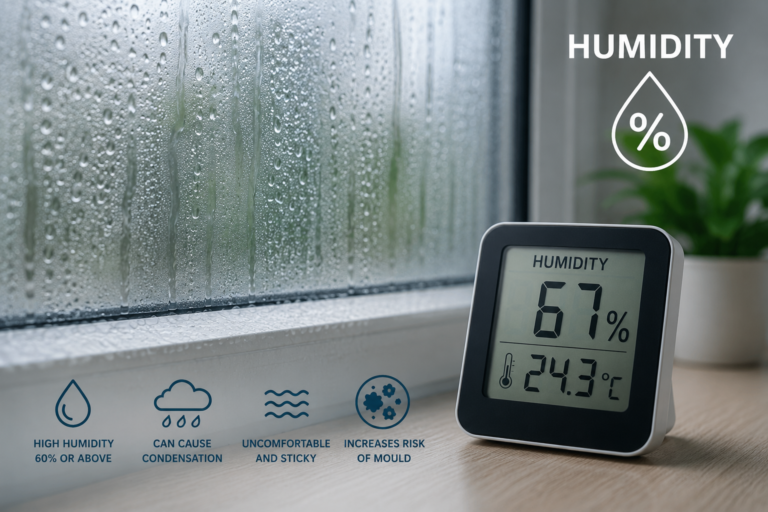
Temperature fluctuations, stale air, excessive humidity, and poor ventilation systems can all negatively affect building occupants.
A well-designed office HVAC system addresses these issues by maintaining stable indoor conditions through intelligent heating, ventilation and air conditioning strategies.
When combined with effective ventilation solutions, businesses can achieve improved air circulation, better humidity control, and healthier indoor spaces.
Thermal comfort is not simply a convenience; it directly influences how people perform, interact, and feel at work.
Forward-thinking organisations increasingly view office climate control as part of their broader ESG strategy, recognising its role in attracting talent and creating resilient workplaces.
Choosing the Right Commercial Air Conditioning System
No two offices have identical requirements.
The ideal solution depends on factors including occupancy levels, floor area, ceiling height, equipment heat loads, building orientation, and future expansion plans.
Before recommending a system, experienced contractors will undertake a comprehensive site survey and cooling load calculation.
This process evaluates:
- Number of occupants
- Internal heat gains from equipment
- Solar heat gain through windows
- Existing ventilation infrastructure
- Operating hours
- Building insulation levels
- Space usage patterns
- Future growth requirements
Accurate HVAC specification is essential. Oversized systems waste energy and increase capital expenditure, while undersized equipment struggles to maintain comfort levels.
Common Office Air Conditioning Systems
Split System Air Conditioning
Split systems consist of an indoor unit connected to an external condenser.
They are often suitable for:
- Small offices
- Meeting rooms
- Individual workspaces
- Server rooms
Benefits include:
- Lower installation costs
- Straightforward maintenance
- Quiet operation
- Good energy efficiency
However, multiple indoor spaces often require several outdoor units.
They can be installed in satellite buildings on a site with a larger central system, for instance in a gatehouse.
Multi-Split Systems
Multi-split systems connect several indoor units to a single external unit.
They offer:
- Greater flexibility
- Reduced external equipment
- Independent zoning systems
- Lower visual impact
These systems work particularly well in medium-sized offices with varied occupancy levels.
Variable Refrigerant Flow Systems
Variable Refrigerant Flow (VRF) systems — sometimes referred to as VRV systems — are among the most popular options for larger commercial premises.
VRF technology uses variable speed compressors to adjust cooling output according to demand.
Advantages include:
- Exceptional energy efficiency
- Simultaneous heating and cooling capabilities
- Occupancy-based cooling
- Advanced smart HVAC controls
- Flexible system design
- Excellent scalability
VRF systems can also integrate with a Building Management System (BMS), enabling remote monitoring and energy monitoring across multiple zones.
Businesses planning long-term growth often favour VRF systems because they support future-proof office design and minimise lifecycle costs.
Ducted Air Conditioning Systems
Ducted air conditioning distributes conditioned air through concealed ductwork.
This approach provides:
- Clean aesthetics
- Consistent temperature control
- Improved noise reduction
- Enhanced occupant comfort
Ducted systems are particularly effective for premium office environments and new-build developments where ceiling void space is available.
Key Questions to Ask Before Installation
Selecting commercial air conditioning should never begin with equipment alone.
Instead, businesses should first consider broader operational requirements.
Ask the following questions:
- What size air conditioning system does an office need?
- How will occupancy patterns change over time?
- Are there existing ventilation systems to integrate?
- Will the office layout change in the future?
- What level of energy efficiency is required?
- Are smart controls or occupancy sensors needed?
- How important is remote monitoring?
- What are the long-term maintenance requirements?
- Can the system support decarbonisation goals?
Businesses should also consider whether their wider facilities strategy includes complementary services such as specialist commercial air conditioning solutions or temperature-controlled environments.
Early planning reduces the risk of costly system upgrades and equipment replacement later.
Understanding UK Air Conditioning Regulations
Commercial air conditioning installation in the UK is subject to several legal and environmental requirements.
Failing to comply can lead to financial penalties, increased operating costs, and avoidable disruption.
Businesses should understand their obligations before selecting equipment or scheduling installation work.
The 12kW TM44 Rule Explained
One of the most frequently misunderstood regulations relates to TM44 inspections.
Under the Energy Performance of Buildings Regulations (EPB Regulations), commercial air conditioning systems with a combined effective rated output exceeding 12kW must undergo regular air conditioning inspections.
These inspections must take place at least every five years.
The process is commonly known as a TM44 inspection because it follows guidance published by the Chartered Institution of Building Services Engineers (CIBSE TM44).
An accredited energy assessor will evaluate:
- System efficiency
- Equipment sizing
- Maintenance records
- Control settings
- Opportunities to reduce energy consumption
- Potential system upgrades
Following the assessment, businesses receive an air conditioning inspection report outlining recommendations for improving operational efficiency.
Many organisations unintentionally exceed the 12kW threshold by adding multiple smaller units over time.
If you’re unsure whether your building qualifies, review the total cooling output across all office air conditioning systems.
F-Gas Regulations and Refrigerant Compliance
Modern commercial cooling systems rely on refrigerants to transfer heat effectively.
However, some refrigerants have a high global warming potential (GWP), which is why the UK continues to tighten F-Gas regulations.
Businesses must ensure:
- Installation is completed by certified engineers
- Refrigerant leak checks are carried out where required
- Refrigerant records are maintained
- Damaged equipment is repaired promptly
- Refrigerant recovery is undertaken correctly during decommissioning
The ongoing refrigerant phase-down is encouraging businesses to adopt sustainable HVAC technologies with lower environmental impact.
Selecting equipment with future refrigerant regulations in mind can help avoid premature equipment replacement and reduce lifecycle costs.
Energy Performance and Sustainability Targets
Commercial buildings are under increasing pressure to reduce emissions and improve energy performance.
Air conditioning plays a significant role in achieving these goals.
Modern systems can contribute to:
- Carbon footprint reduction
- Net zero buildings strategies
- BREEAM certification targets
- NABERS UK performance improvements
- Corporate ESG objectives
Businesses should consider:
- Seasonal energy efficiency ratio (SEER)
- Seasonal coefficient of performance (SCOP)
- Inverter technology
- Heat recovery capabilities
- Demand-controlled ventilation
- Renewable energy integration
Low-carbon cooling solutions not only support environmental compliance but also improve return on investment through reduced energy bills.
The cheapest installation rarely delivers the lowest total cost of ownership. Energy performance, maintenance requirements, and future compliance costs matter just as much as upfront pricing.
How Much Does Office Air Conditioning Installation Cost?
Installation pricing varies significantly depending on building requirements.
There is no universal figure because every office presents unique challenges.
Factors affecting office air conditioning costs include:
- Building size
- Number of zones
- Cooling capacity requirements
- Ceiling configuration
- Existing infrastructure
- System type
- Electrical upgrades
- Access restrictions
- Smart controls integration
- Commissioning complexity
As a general rule, split system air conditioning carries lower upfront costs than large-scale Variable Refrigerant Flow systems or centralised cooling systems.
However, focusing solely on capital expenditure can be misleading.
Businesses should assess:
- Installation costs
- Operational costs
- Maintenance costs
- Energy consumption
- Equipment lifespan
- Future expansion requirements
- Compliance obligations
A full lifecycle assessment provides a more accurate picture of long-term value.
Calculating Return on Investment
Commercial air conditioning should be viewed as a strategic investment.
The return extends beyond energy savings alone.
Potential benefits include:
- Improved staff productivity
- Reduced absenteeism
- Enhanced employee comfort
- Better indoor environmental quality
- Increased workplace satisfaction
- Lower maintenance expenditure
- Improved asset value
Smart HVAC controls, occupancy sensors, and connected buildings technologies can further improve payback periods through better energy monitoring and predictive maintenance.
Businesses should request detailed commercial HVAC quotes that clearly outline:
- Equipment specifications
- Installation scope
- Commissioning processes
- Warranty details
- Annual servicing requirements
- Maintenance contracts
- Project timelines
Transparent proposals reduce the likelihood of unexpected costs later.
Future-Proofing Your Workplace Climate Control Strategy
Office requirements evolve quickly.
Hybrid working office design has changed how many businesses use space, creating fluctuating occupancy patterns that traditional HVAC systems struggle to accommodate.
Forward-thinking organisations are increasingly investing in:
- Internet of Things HVAC technology
- Building analytics
- Occupancy-based cooling
- Digital twins
- Smart controls
- Remote monitoring
- Predictive maintenance
These technologies enable businesses to optimise performance in real time while improving resilience planning and climate adaptation.
Future-proof office design means selecting systems that can adapt as business needs change.
Scalable solutions such as VRF systems and hybrid HVAC systems offer flexibility without requiring significant infrastructure changes.
Businesses operating specialist facilities alongside office environments may also benefit from integrating climate control with wider temperature management strategies, including dedicated commercial refrigeration services.
For organisations managing temporary projects, seasonal demand spikes, or off-site operations, flexible cooling and storage options such as refrigerated trailer hire can help maintain continuity without major capital investment.
The most successful commercial HVAC installations don’t simply solve today’s challenges — they anticipate tomorrow’s requirements.
Why Maintenance Matters After Installation
The success of a commercial air conditioning installation isn’t measured on the day commissioning is completed.
Long-term performance depends on consistent maintenance, proactive servicing, and regular compliance audits.
Even the most advanced office HVAC systems will gradually lose efficiency if filters become clogged, refrigerant levels drop, or control settings drift away from optimal performance.
Without a structured maintenance plan, businesses often experience:
- Higher energy bills
- Reduced cooling capacity
- Increased equipment wear
- Unexpected downtime
- Poor indoor air quality
- Shortened equipment lifespan
- Increased risk of compliance issues
Preventative maintenance helps identify small problems before they become costly failures. Spend a little save a lot.
Routine air conditioning servicing typically includes:
- Filter replacement
- Coil cleaning
- Refrigerant management checks
- Inspection of electrical components
- Verification of airflow rates
- System diagnostics
- Performance optimisation
- Control calibration
- Condensate drain cleaning
- Leak detection
Regular maintenance schedules support breakdown prevention while ensuring systems continue operating at peak efficiency.
How Often Should Commercial Air Conditioning Be Serviced?
The ideal servicing frequency depends on factors such as:
- System type
- Occupancy levels
- Operating hours
- Building environment
- Manufacturer recommendations
- Regulatory obligations
Most office air conditioning systems manufacturers recommend every 6 months.But as minimum for warranties and compliance annually.
However, larger systems operating continuously or on site with challenging environments, such as some types of manufacturing where AC filters get chocked, may require quarterly inspections.
Businesses should establish planned maintenance programmes rather than relying on reactive maintenance.
A proactive approach delivers measurable benefits, including:
- Lower operational costs
- Greater energy efficiency
- Reduced business disruption
- Improved workplace comfort
- Extended equipment lifespan
- Enhanced environmental compliance
Maintaining accurate service records can also simplify TM44 inspections and support warranty claims.
Common Mistakes Businesses Make During Installation Projects
Commercial HVAC installation is a significant investment, yet many organisations repeat the same avoidable mistakes.
Understanding these pitfalls can help protect your budget and improve long-term outcomes.
Choosing Equipment Based on Price Alone
The lowest quote rarely provides the best value.
Cheaper systems may lead to:
- Higher maintenance costs
- Poor energy performance
- Reduced reliability
- Limited scalability
- Earlier equipment replacement
Assess total cost of ownership instead of focusing solely on upfront installation pricing.
Ignoring Ventilation Requirements
Cooling alone does not guarantee healthy workplaces.
Adequate fresh air supply and effective air circulation are essential for maintaining indoor environmental quality.
Heating, ventilation and air conditioning systems should work together to deliver balanced workplace conditions.
Neglecting ventilation requirements can contribute to:
- Stale air
- Excess humidity
- Poor concentration
- Increased CO2 levels
- Increased absenteeism
- Reduced occupant satisfaction
Failing to Consider Future Growth
Businesses evolve.
Office layouts change, teams expand, and occupancy patterns shift.
Choosing a rigid system without considering future needs can result in expensive retrofit installation projects later.
Scalable technologies and flexible zoning systems help support future growth.
Overlooking Smart Controls
Many businesses invest in high-performance equipment but fail to maximise efficiency through intelligent control strategies.
Features such as:
- Occupancy sensors
- Energy monitoring
- Remote monitoring
- Building Management System integration
- Smart HVAC controls
can significantly reduce energy consumption while improving employee comfort.
Delaying Maintenance Planning
Maintenance contracts should be considered before installation is complete.
Waiting until issues arise often results in higher costs and avoidable downtime.
Effective commissioning should include a clear strategy for ongoing servicing, compliance audits, and performance reviews.
Frequently Asked Questions
What should I look for in an installation company?
No obvious answer here. But here are some tips. A company that can provide maintenance and service all year round, not ghost you during the busy summer months when you require a service call. A good local reputation. A professional looking updated website. Professional standards such as ISO9001, Refcom, and Construction Line. Check they are insured and what warranty they offer, the longer the better.
What size air conditioning system does an office need?
The correct system size depends on cooling load calculations rather than floor space alone.
Factors such as occupancy levels, solar gain, equipment heat output, ceiling height, insulation, and ventilation rates all influence cooling requirements.
A professional site survey ensures accurate system design.
How long does commercial air conditioning installation take?
Installation timelines vary depending on project complexity.
Small split system installations may take one or two days, while larger commercial HVAC installations involving ductwork, VRF systems, or multiple zones can take several weeks.
Project duration may also be affected by:
- Building access restrictions
- Electrical upgrades
- Planning approval requirements
- Commissioning processes
Does office air conditioning require planning permission?
Many installations do not require formal approval.
However, planning permission may be necessary for:
- Listed buildings
- Conservation areas
- Large external units
- Buildings with noise restrictions
Always confirm local requirements before proceeding.
Do offices need TM44 inspections?
Yes – well some do.
Commercial air conditioning systems with a combined cooling output of 12kW or more must undergo TM44 inspections at least every five years. The 12kW is for all the systems on site, such as the main building, the gatehouse and the workshop.
These inspections assess energy performance and identify opportunities to improve efficiency.
What are F-Gas regulations for businesses?
F-Gas compliance rules govern the use, handling, and maintenance of refrigerants.
Businesses may be required to conduct refrigerant leak checks, maintain records, and ensure work is completed by certified professionals.
What is the most energy-efficient office air conditioning system?
There is no universal answer.
Energy-efficient air conditioning depends on selecting the right system for the building.
Modern Variable Refrigerant Flow systems, heat pump systems, and hybrid HVAC systems often deliver excellent results when combined with smart controls and demand-controlled ventilation.
But our design team are experts and will advise you.
Creating a Workplace That Performs Better
Office air conditioning is no longer simply a facilities management consideration.
It’s a strategic investment that affects employee wellbeing, workplace productivity, operational efficiency, and environmental performance.
The right solution balances:
- Comfort
- Compliance
- Energy efficiency
- Scalability
- Sustainability
- Long-term value
Businesses that invest in thoughtful system design, preventative maintenance, and future-proof technologies are better positioned to adapt to changing workplace demands.
Whether you’re planning a new office fit-out, replacing ageing equipment, or improving indoor environmental quality, successful projects start with a clear understanding of your building’s unique requirements.
From cooling load calculations and system design to commissioning and ongoing servicing, every decision contributes to the long-term success of your investment.
By prioritising thermal comfort, embracing sustainable HVAC technologies, and staying ahead of regulatory changes, businesses can create healthier, more productive workplaces while controlling costs and supporting broader carbon reduction goals.
For tailored advice on commercial climate control solutions, visit Air Con Group to explore bespoke services designed for modern business environments.